What Would a Nuclear Power Do If It Lost a Conventional War? The Russia–Ukraine Case

What Would a Nuclear Power Do If It Lost a Conventional War? The Russia–Ukraine Case
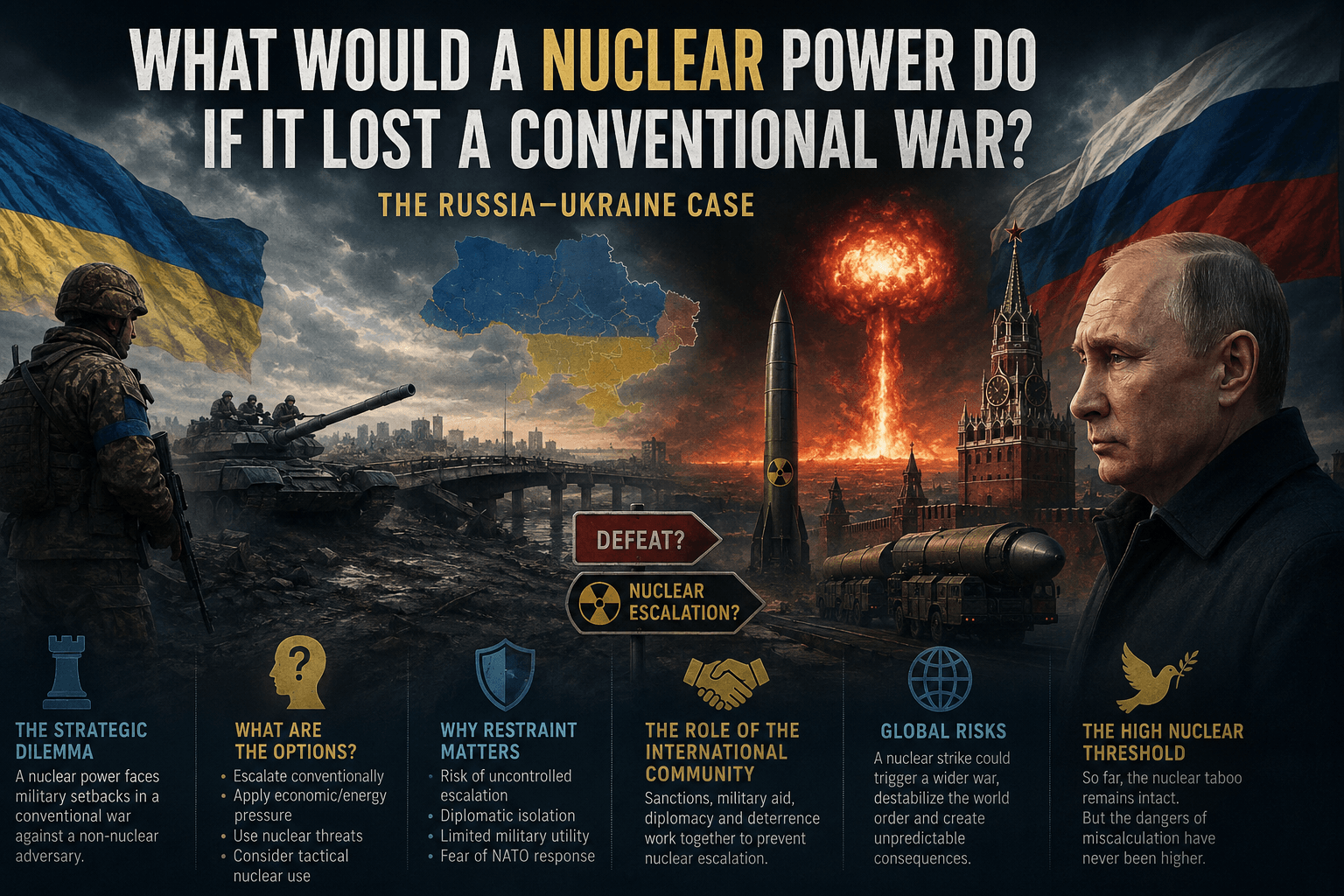
The war between Russia and Ukraine has revived one of the most dangerous questions in modern geopolitics: what happens when a nuclear power risks losing a conventional war against a non-nuclear state? For decades, nuclear strategy was built around the assumption that nuclear-armed states would rarely face existential military defeat. Nuclear weapons themselves were supposed … Read more
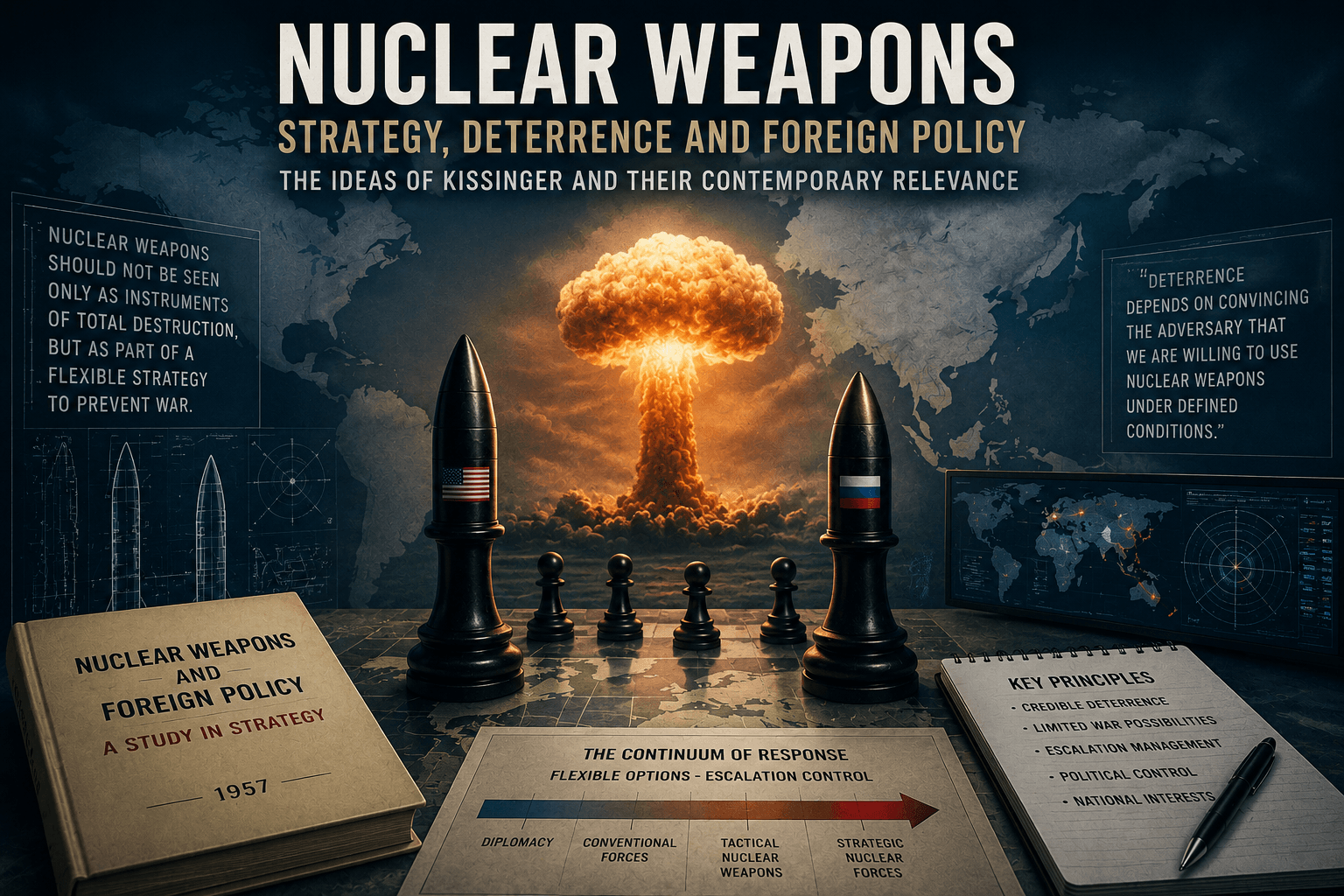
Henry Kissinger and Nuclear Weapons: Strategy, Limited War, and Modern Relevance

Henry Kissinger and Nuclear Weapons: Strategy, Limited War, and Modern Relevance

In the tense atmosphere of the early Cold War, few strategic thinkers influenced Western nuclear doctrine as profoundly as Henry Kissinger. Before becoming a famous diplomat and U.S. Secretary of State, Kissinger established himself as a controversial intellectual voice through his 1957 book Nuclear Weapons and Foreign Policy. Written during a period marked by fear of atomic annihilation and growing rivalry between the United States and the Soviet Union, the work challenged dominant assumptions regarding nuclear war. Instead of treating nuclear conflict as an unthinkable apocalypse that could only end in total destruction, Kissinger argued that limited nuclear war might be strategically possible and, under certain circumstances, politically necessary. His ideas reshaped debates on deterrence, military planning, and Cold War diplomacy, while also generating intense criticism from scholars, military leaders, and peace advocates.

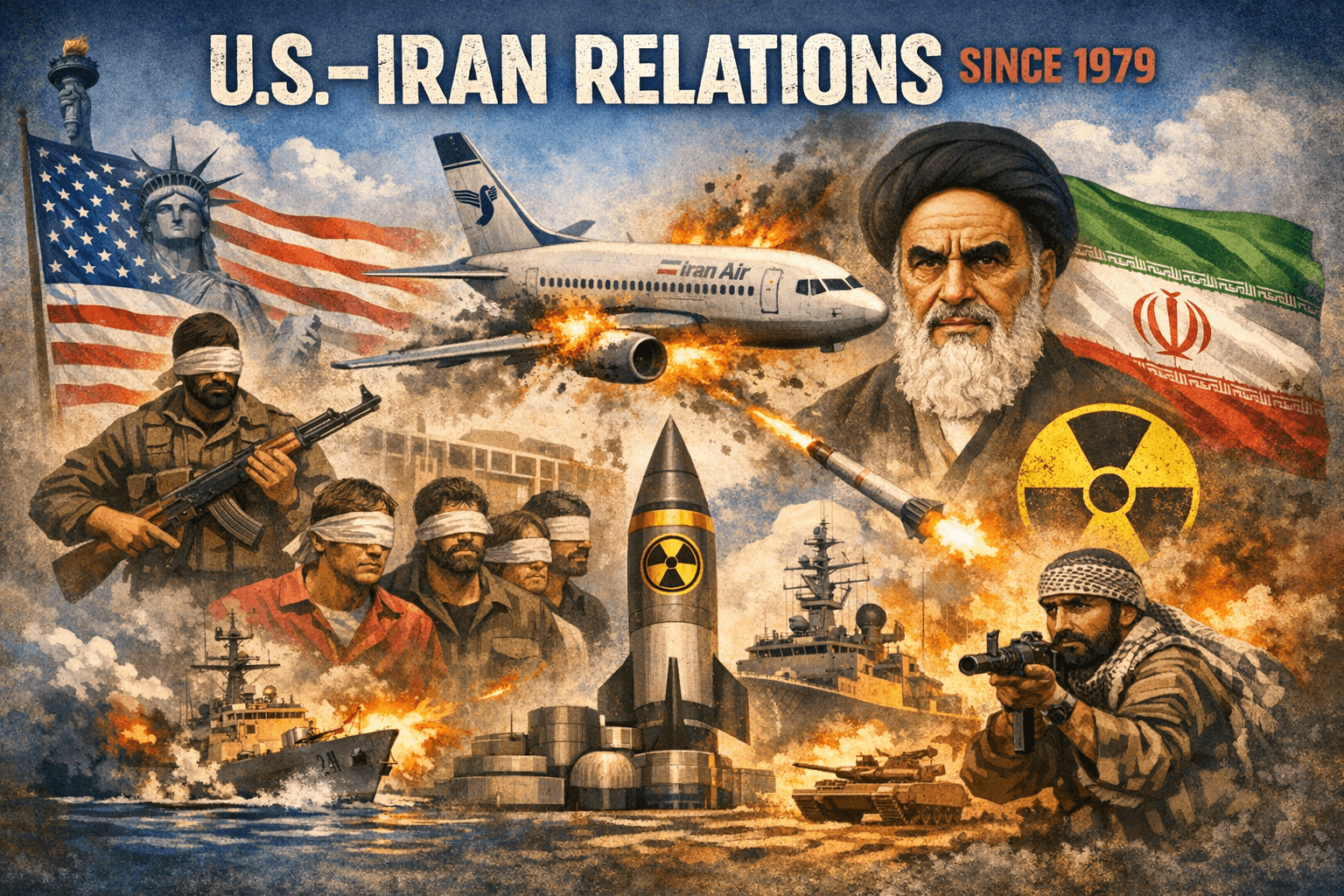
From Hostages to Nuclear Talks: A Timeline of U.S.–Iran Relations, 1979–Today

From Hostages to Nuclear Talks: A Timeline of U.S.–Iran Relations, 1979–Today

The relationship between the United States and Iran since 1979 has been one of the most complex and volatile in modern international politics. Once strategic allies during the Cold War, the two countries became adversaries after the Iranian Revolution replaced the pro-Western monarchy with an Islamic Republic deeply suspicious of American influence. Over the following … Read more

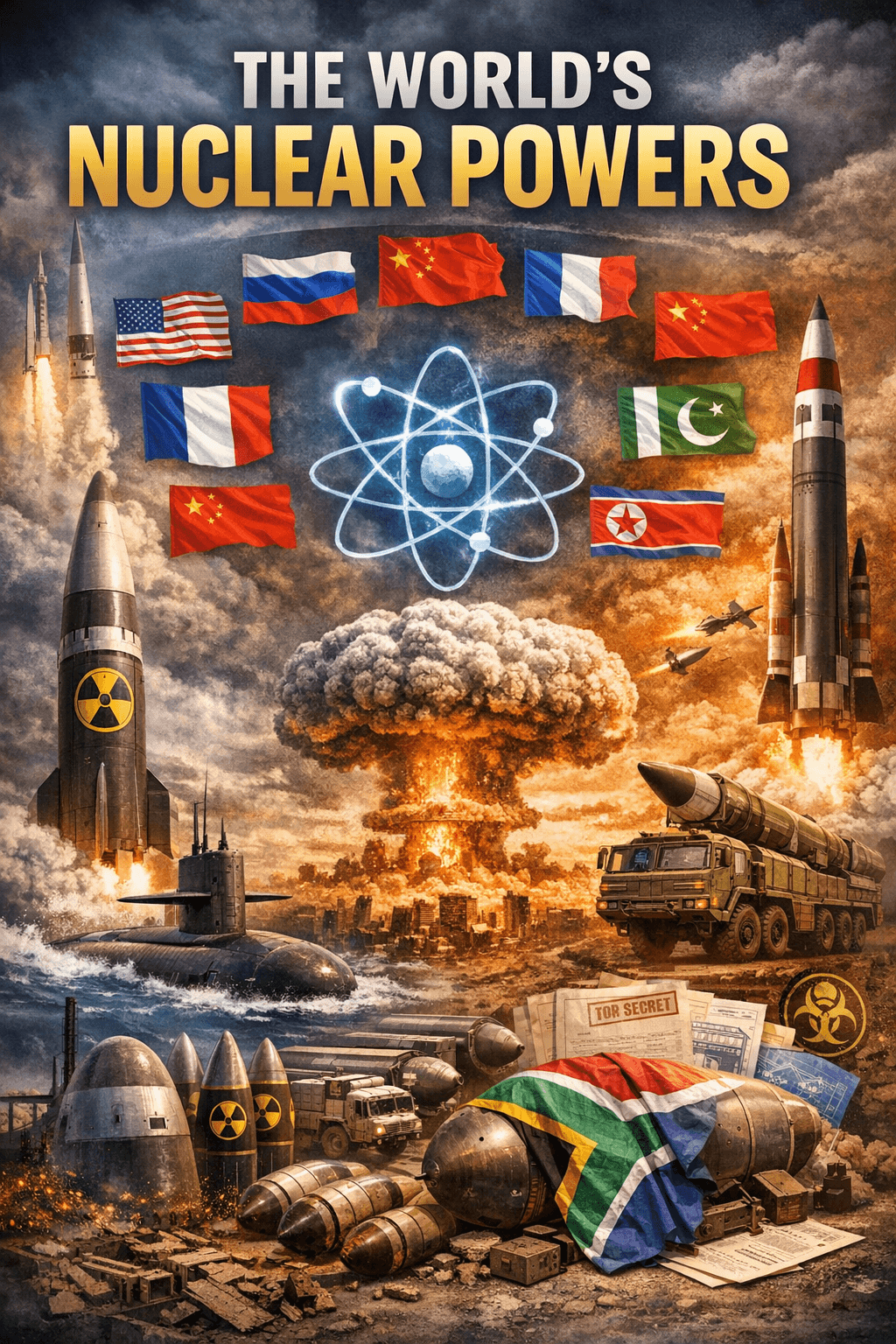
The World’s Nuclear Powers: Capabilities, History, and Risks to Humanity

The World’s Nuclear Powers: Capabilities, History, and Risks to Humanity

Introduction Since the detonation of the first atomic bomb in 1945, nuclear weapons have reshaped international politics, military strategy, and humanity’s perception of existential risk. The unprecedented destructive power demonstrated during the atomic bombings of Hiroshima and Nagasaki revealed that a single weapon could devastate an entire city. In the decades that followed, several countries … Read more

Europe Under a Shared Nuclear Umbrella: Strategic Autonomy and Transatlantic Complementarity

Europe Under a Shared Nuclear Umbrella: Strategic Autonomy and Transatlantic Complementarity

In recent years, the debate over Europe’s strategic autonomy has intensified, driven by geopolitical instability, the war in Ukraine, and shifting global power dynamics. Among the most significant proposals emerging from this discussion is the initiative promoted by French President Emmanuel Macron to extend France’s nuclear deterrence umbrella to cover European partners. The proposal has … Read more