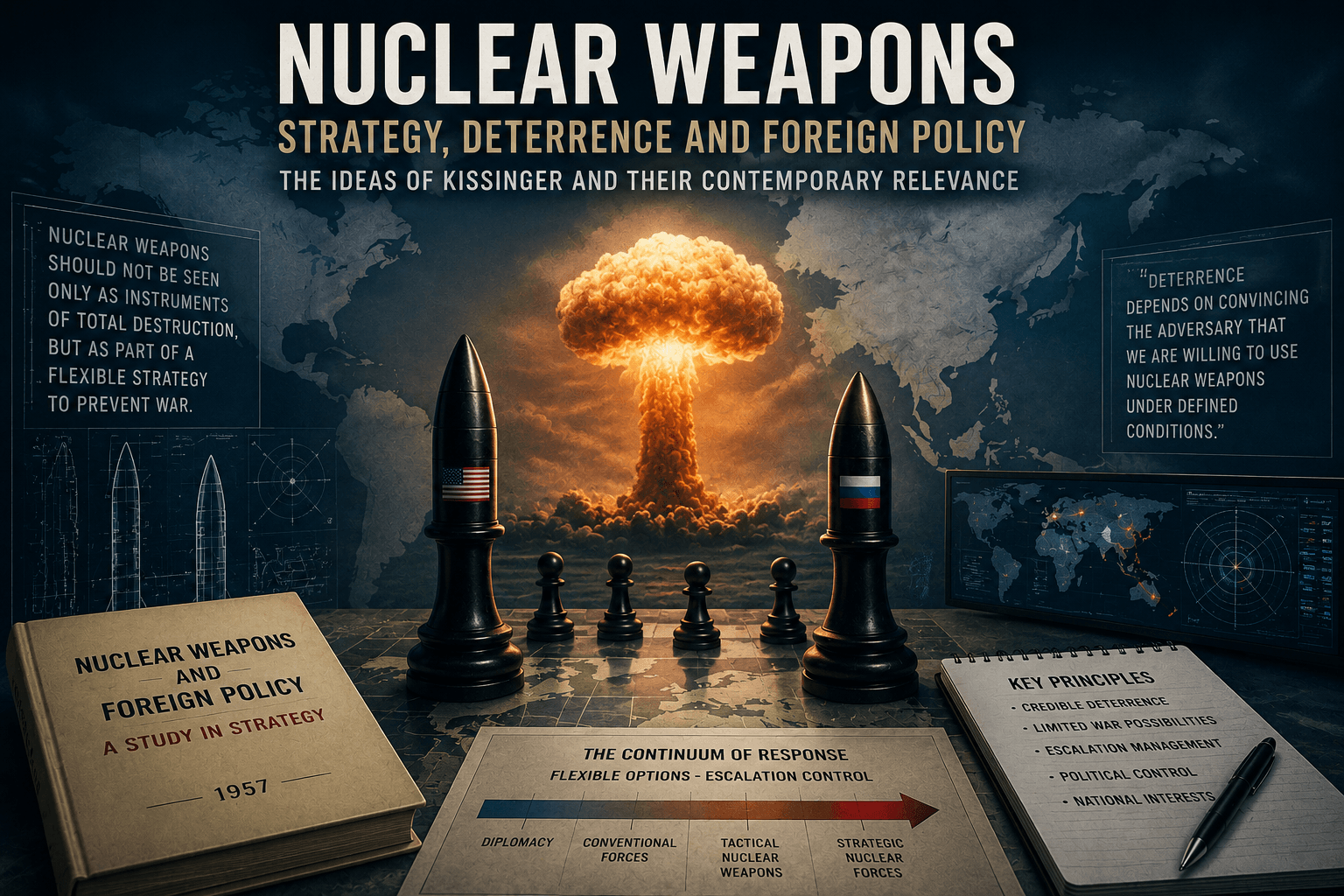
In the tense atmosphere of the early Cold War, few strategic thinkers influenced Western nuclear doctrine as profoundly as Henry Kissinger. Before becoming a famous diplomat and U.S. Secretary of State, Kissinger established himself as a controversial intellectual voice through his 1957 book Nuclear Weapons and Foreign Policy. Written during a period marked by fear of atomic annihilation and growing rivalry between the United States and the Soviet Union, the work challenged dominant assumptions regarding nuclear war. Instead of treating nuclear conflict as an unthinkable apocalypse that could only end in total destruction, Kissinger argued that limited nuclear war might be strategically possible and, under certain circumstances, politically necessary. His ideas reshaped debates on deterrence, military planning, and Cold War diplomacy, while also generating intense criticism from scholars, military leaders, and peace advocates.