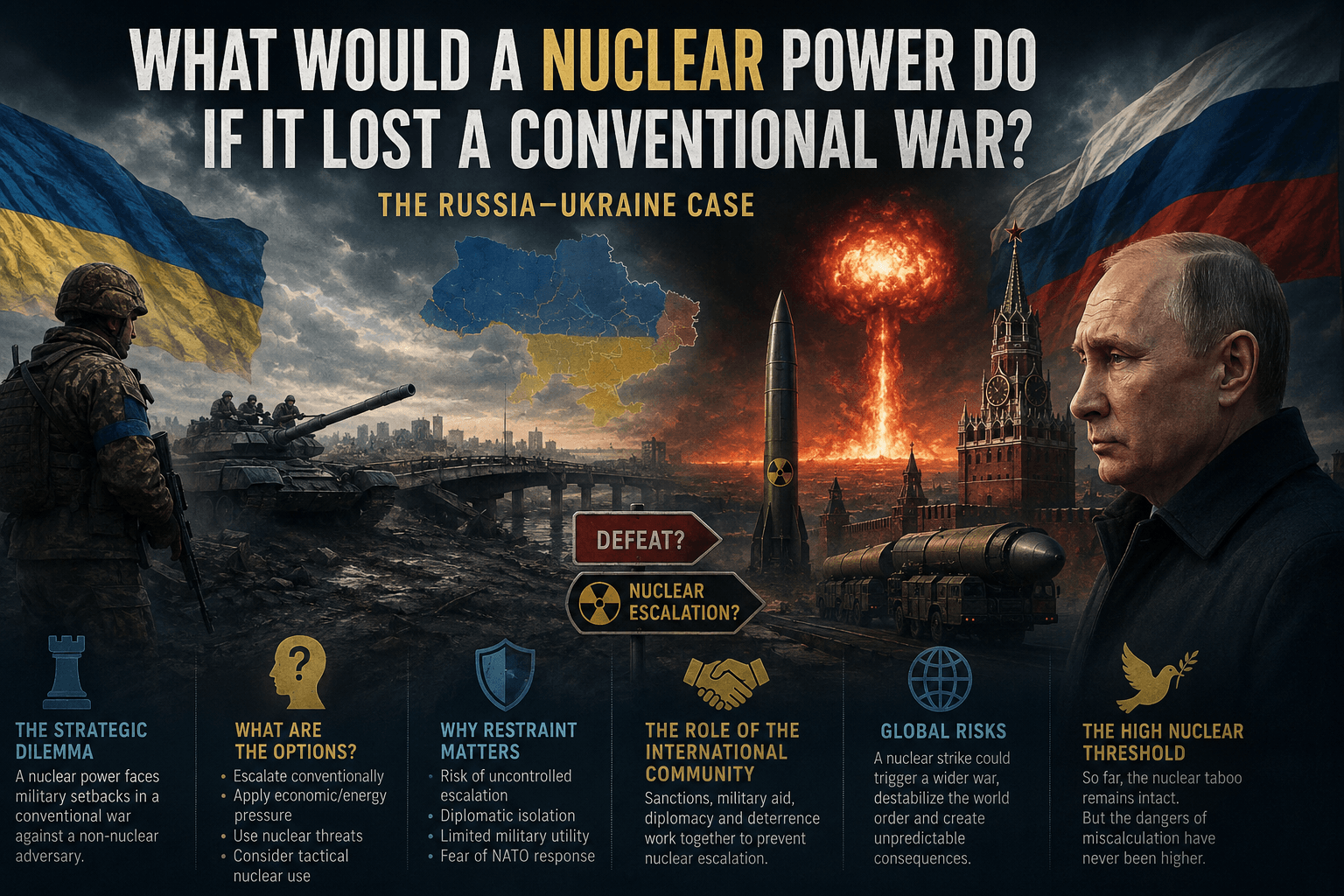
What Would a Nuclear Power Do If It Lost a Conventional War? The Russia–Ukraine Case

What Would a Nuclear Power Do If It Lost a Conventional War? The Russia–Ukraine Case

The war between Russia and Ukraine has revived one of the most dangerous questions in modern geopolitics: what happens when a nuclear power risks losing a conventional war against a non-nuclear state? For decades, nuclear strategy was built around the assumption that nuclear-armed states would rarely face existential military defeat. Nuclear weapons themselves were supposed … Read more

Triangular Diplomacy and the European Union: From the Cold War to a New Geopolitical Reality

Triangular Diplomacy and the European Union: From the Cold War to a New Geopolitical Reality

Triangular diplomacy has shaped global politics for more than seven decades. The concept refers to the strategic interaction between three major powers, each attempting to balance, manipulate, or cooperate with the others in order to maximize its own geopolitical advantage. During the Cold War, the triangle formed by the United States, the Soviet Union, and Communist China fundamentally transformed the international system. Today, a new version of triangular diplomacy is emerging, one with profound implications for the European Union.

BRICS: What It Is and What It Wants to Become

BRICS: What It Is and What It Wants to Become

In recent years, BRICS has evolved from a loose economic concept into one of the most discussed geopolitical blocs in the world. Originally formed by Brazil, Russia, India, China, and South Africa, the organization now seeks to present itself as a major alternative voice to the Western-led international order. Supporters see BRICS as a platform for multipolarity, economic cooperation, and reform of global institutions. Critics, however, argue that the bloc suffers from deep internal contradictions, limited cohesion, and unrealistic ambitions.

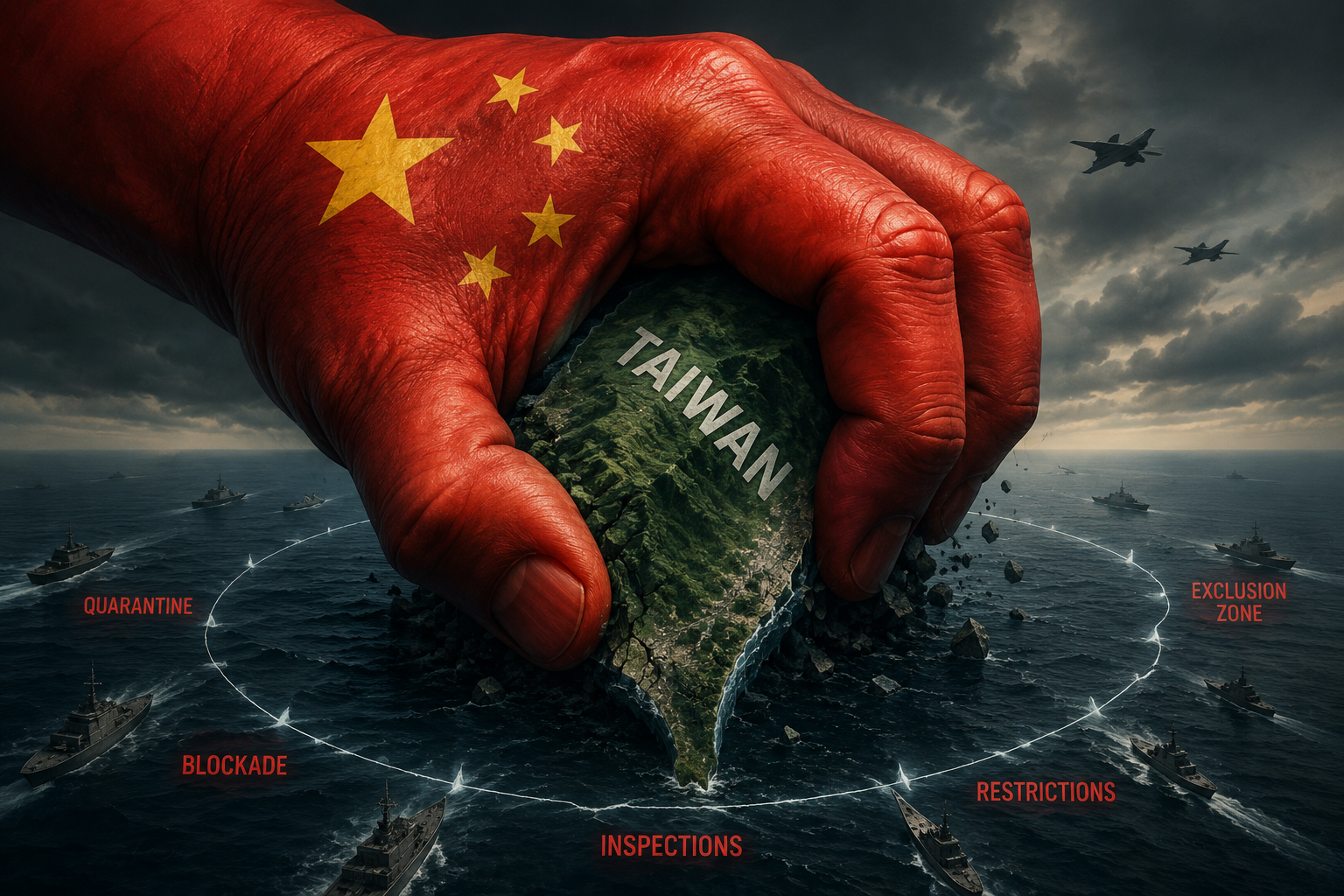
The Taiwanese Gambit: Trading Taiwan to Solve the North Korean Nuclear Crisis?

The Taiwanese Gambit: Trading Taiwan to Solve the North Korean Nuclear Crisis?

The North Korean Issue on the International Agenda We may safely say that the North Korean nuclear issue has returned to the forefront of the international agenda in the context of the second term of Donald Trump. The reemergence of this challenge highlights the persistence of a problem that has preoccupied successive White House administrations … Read more

Why a Palestinian State May Pose Strategic Risks for Israel

Why a Palestinian State May Pose Strategic Risks for Israel

There are ideas that, at first glance, appear unquestionably just. The creation of a Palestinian state is one of them. It seems like the natural, moral, and, for many, inevitable solution. Yet this apparent self-evidence conceals a fundamental problem: what is just in principle is not always sustainable in practice. The refusal of Benjamin Netanyahu … Read more

The Case Against a Nuclear-Armed Iran

The Case Against a Nuclear-Armed Iran

The Origins and Evolution of Nuclear Nonproliferation The idea of nuclear nonproliferation emerged in the aftermath of World War II, when the devastating power of atomic weapons became evident following the bombings of Hiroshima and Nagasaki in 1945. The unprecedented destructive capacity of nuclear arms prompted both fear and strategic reflection among world leaders. Early … Read more

From “America First” to “America Alone”: What the Strait of Hormuz Reveals

From “America First” to “America Alone”: What the Strait of Hormuz Reveals

The slogan “America First” has long resonated in U.S. political discourse, evoking a promise of national strength, economic protection, and strategic independence. Yet, in practice—particularly during the Trump administration—this doctrine has often translated into a more isolating posture: one that risks turning “America First” into “America Alone.” From trade disputes with European allies to strained … Read more