What Would a Nuclear Power Do If It Lost a Conventional War? The Russia–Ukraine Case

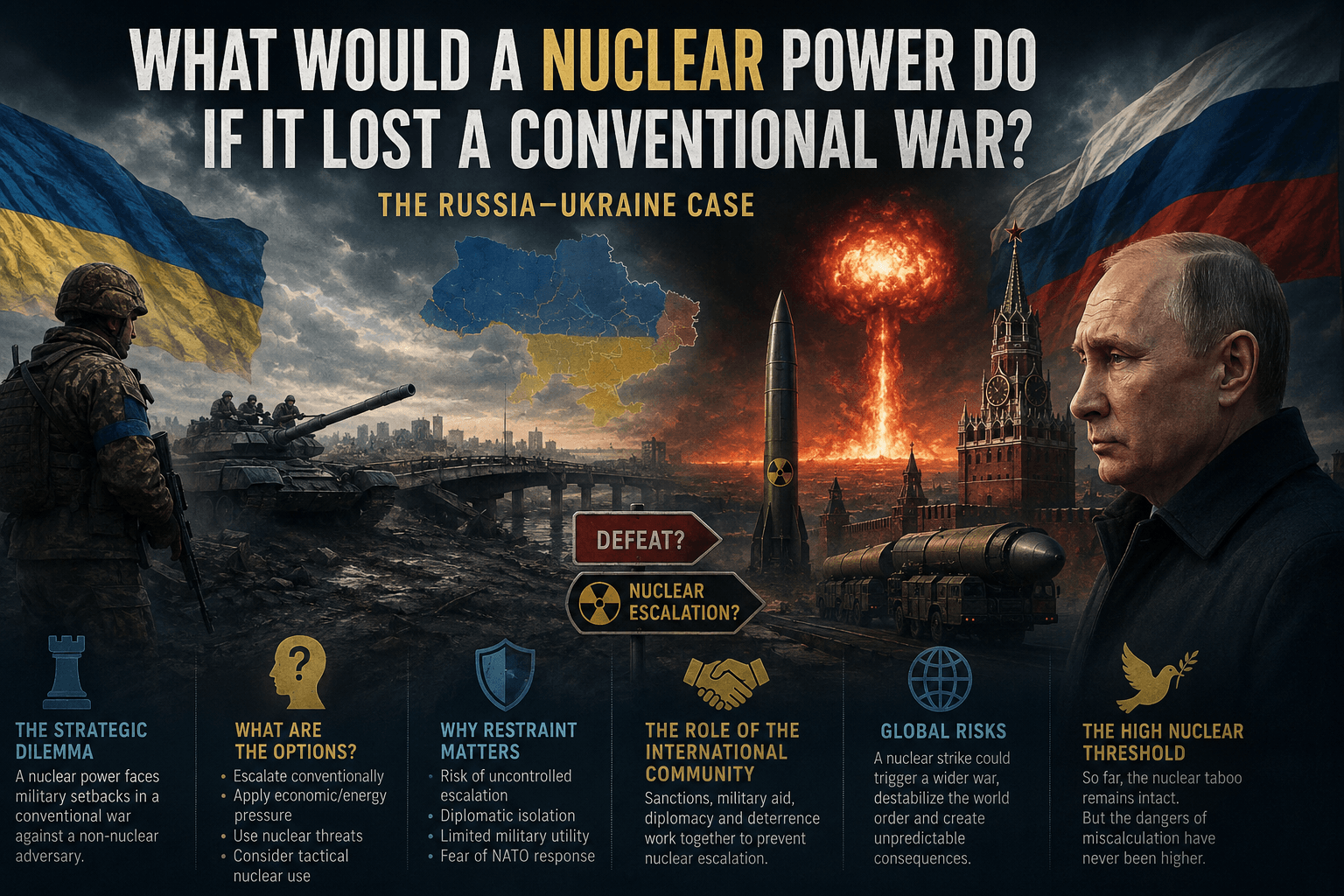
What Would a Nuclear Power Do If It Lost a Conventional War? The Russia–Ukraine Case

The war between Russia and Ukraine has revived one of the most dangerous questions in modern geopolitics: what happens when a nuclear power risks losing a conventional war against a non-nuclear state? For decades, nuclear strategy was built around the assumption that nuclear-armed states would rarely face existential military defeat. Nuclear weapons themselves were supposed … Read more

Henry Kissinger and Nuclear Weapons: Strategy, Limited War, and Modern Relevance

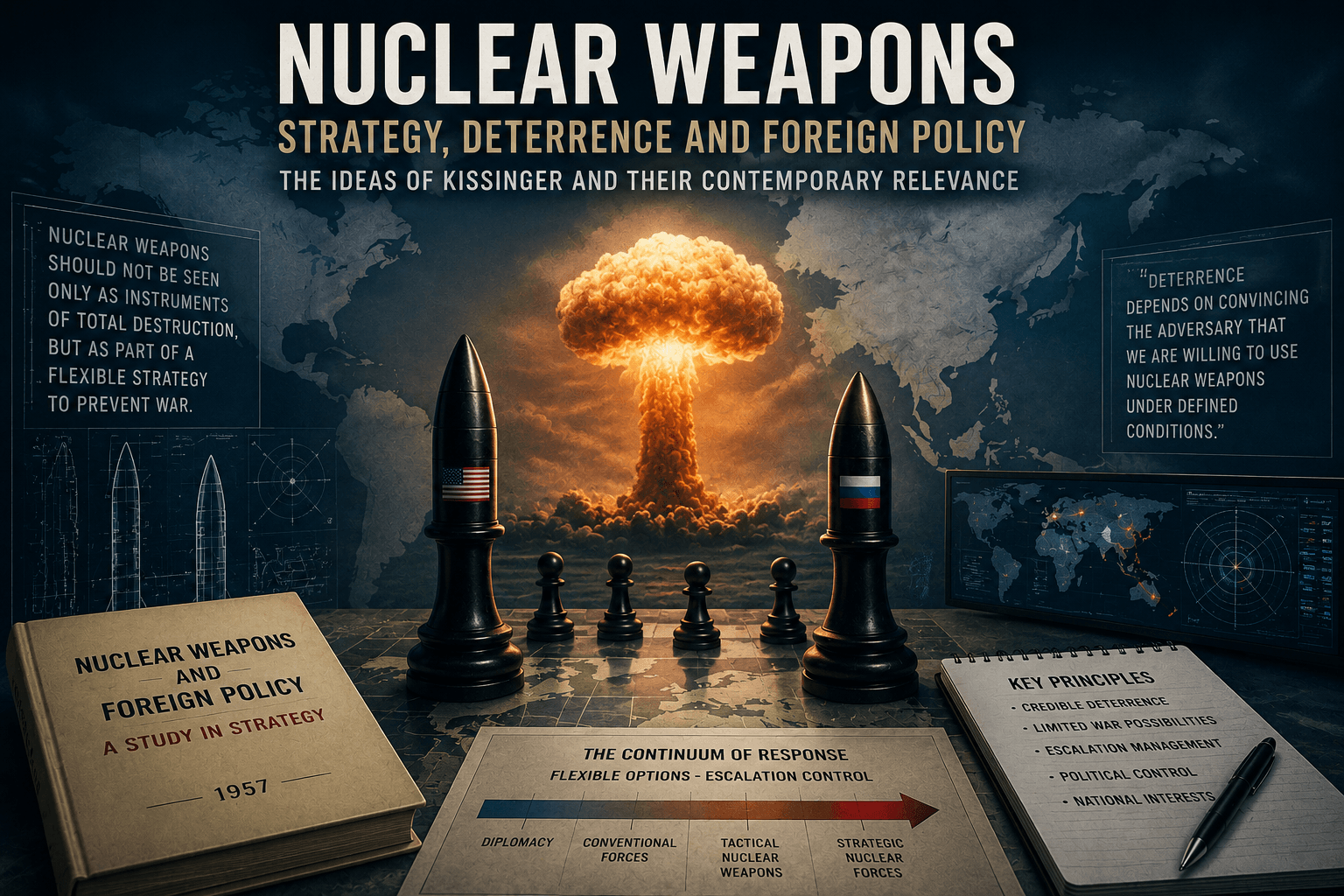
Henry Kissinger and Nuclear Weapons: Strategy, Limited War, and Modern Relevance

In the tense atmosphere of the early Cold War, few strategic thinkers influenced Western nuclear doctrine as profoundly as Henry Kissinger. Before becoming a famous diplomat and U.S. Secretary of State, Kissinger established himself as a controversial intellectual voice through his 1957 book Nuclear Weapons and Foreign Policy. Written during a period marked by fear of atomic annihilation and growing rivalry between the United States and the Soviet Union, the work challenged dominant assumptions regarding nuclear war. Instead of treating nuclear conflict as an unthinkable apocalypse that could only end in total destruction, Kissinger argued that limited nuclear war might be strategically possible and, under certain circumstances, politically necessary. His ideas reshaped debates on deterrence, military planning, and Cold War diplomacy, while also generating intense criticism from scholars, military leaders, and peace advocates.

What Is Geopolitics? Meaning, Examples, and Why It Matters Today

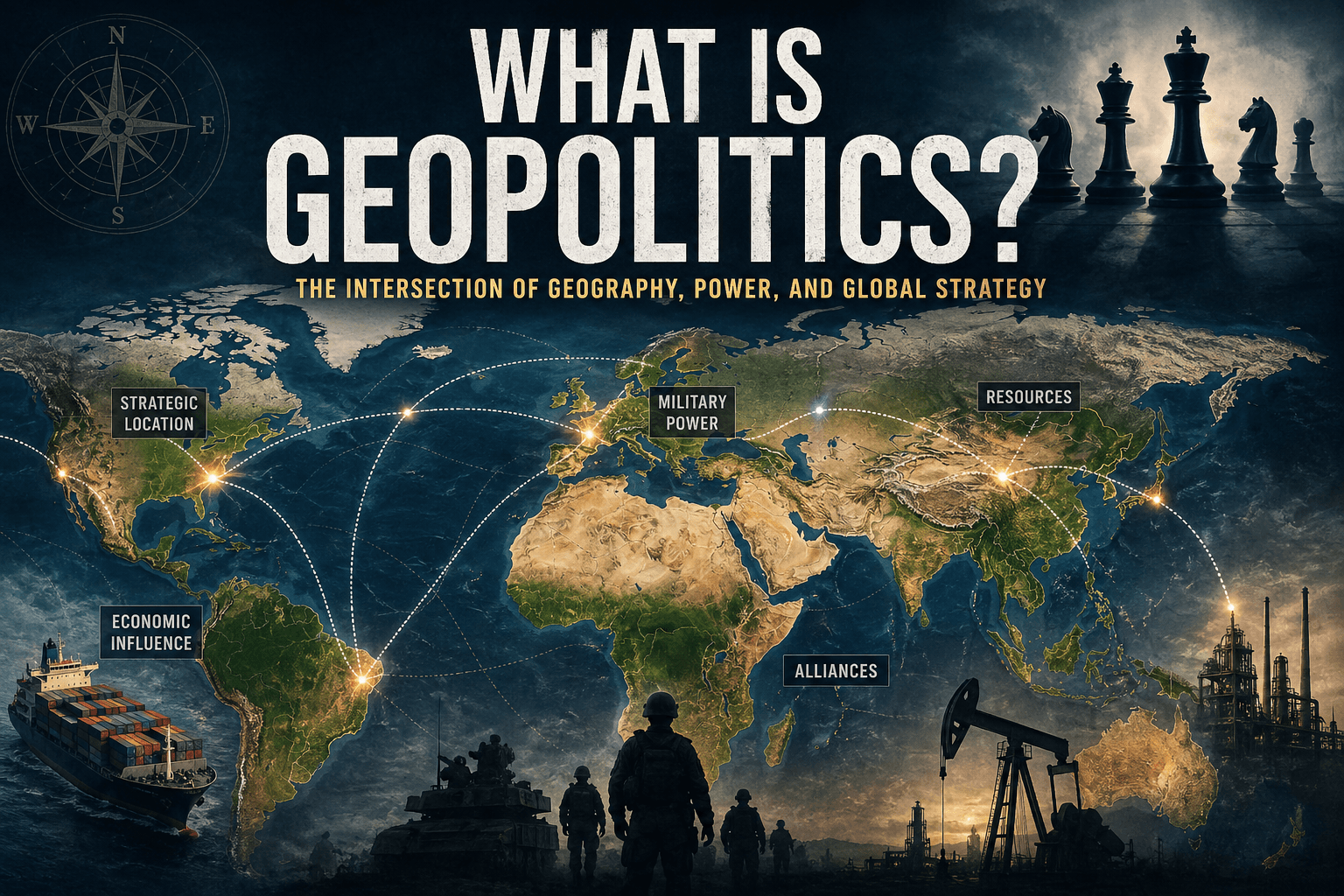
What Is Geopolitics? Meaning, Examples, and Why It Matters Today

Where Geography Becomes Power: Understanding the Forces That Shape Global Politics Geopolitics is the analytical framework that explains how geography conditions political power, state behavior, and the structure of international order. In its simplest formulation, geopolitics studies the interaction between space and power—how territory, location, resources, and physical constraints shape strategic choices, alliances, conflicts, and … Read more

Does NATO Automatically Go to War? Article 5 Explained

Does NATO Automatically Go to War? Article 5 Explained

What NATO Article 5 Really Means—and Why It Is Designed to Prevent War Public debate often treats Article 5 of NATO as a mechanical trigger that automatically converts an attack on one member into a collective war involving all. This interpretation is both widespread and fundamentally incorrect. Article 5 is not a war trigger but … Read more

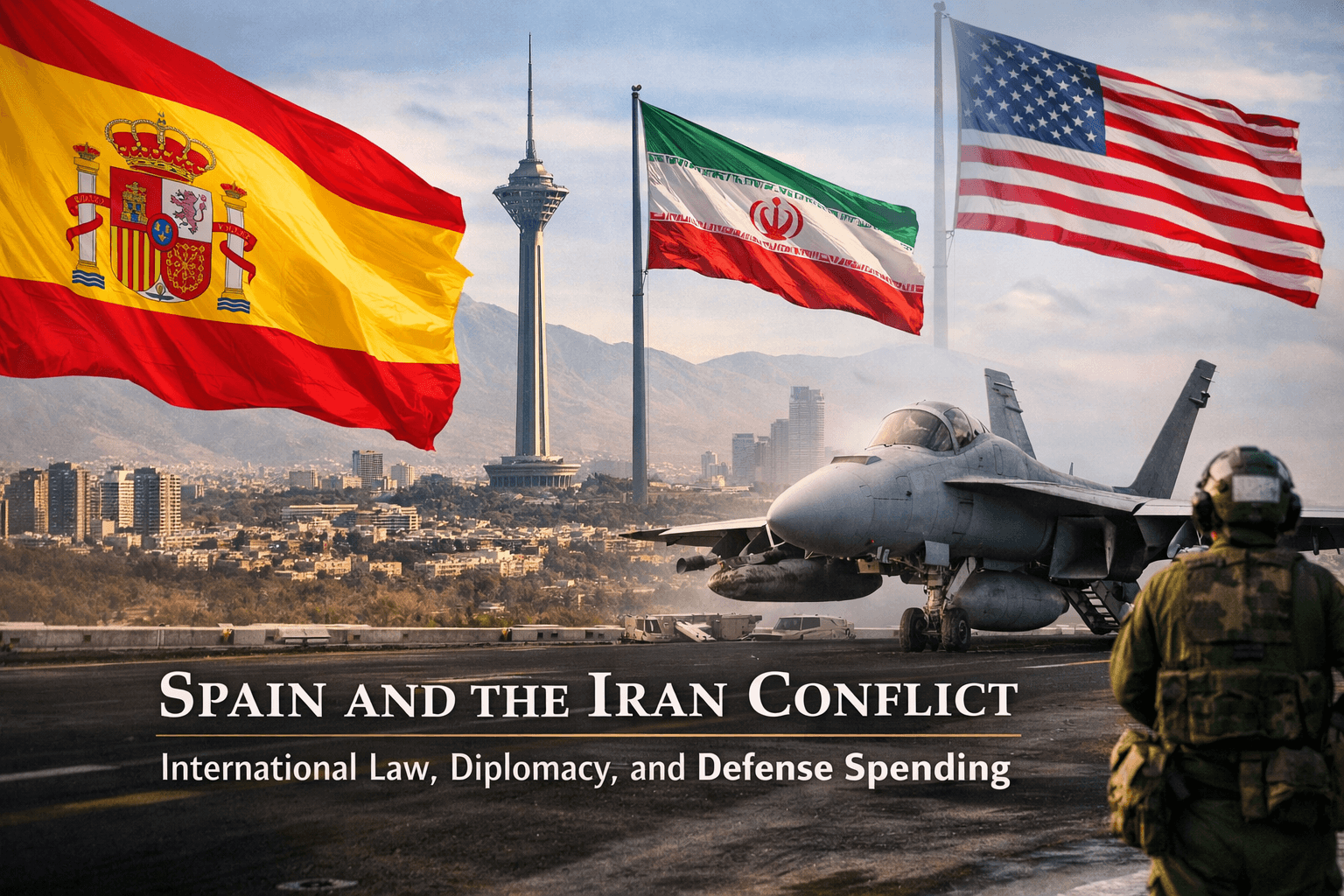
Spain, the Iran Conflict, and the Primacy of International Law: A European Perspective on War, Alliances, and Defense Spending

Spain, the Iran Conflict, and the Primacy of International Law: A European Perspective on War, Alliances, and Defense Spending

Introduction The recent escalation of tensions surrounding Iran has generated profound debate among Western allies regarding the legality, legitimacy, and strategic consequences of military action in the Middle East. While several governments have supported the United States’ confrontational approach toward Tehran, Spain has adopted a more cautious and legally grounded position. Madrid’s response reflects a … Read more

The 2026 Iran–United States–Israel Confrontation: objective analysis of causes, justifications, legal issues, likely endgames and economic consequences

The 2026 Iran–United States–Israel Confrontation: objective analysis of causes, justifications, legal issues, likely endgames and economic consequences

Summary Between late February and early March 2026, coordinated strikes by the United States and Israel against targets inside the Islamic Republic of Iran produced a dramatic escalation: explosions in multiple Iranian cities, substantial Iranian retaliatory missile and drone attacks against Israeli territory and U.S. forces in the region, and significant civilian casualties and infrastructure … Read more

Analysis: Iran’s Protests and the Structural Limits of Regime Control

Analysis: Iran’s Protests and the Structural Limits of Regime Control

The current wave of protests in Iran reflects more than a cyclical episode of social unrest; it exposes deep structural vulnerabilities within the Islamic Republic that economic repression and coercive force alone can no longer fully contain.

At the structural level, Iran’s crisis is driven by a convergence of long-term economic decline, demographic pressure, and political stagnation. High inflation, currency devaluation, and chronic unemployment—especially among urban youth—have steadily eroded the regime’s social contract. Subsidies and welfare mechanisms that once mitigated public anger are increasingly unsustainable, limiting the state’s capacity to “buy” stability.