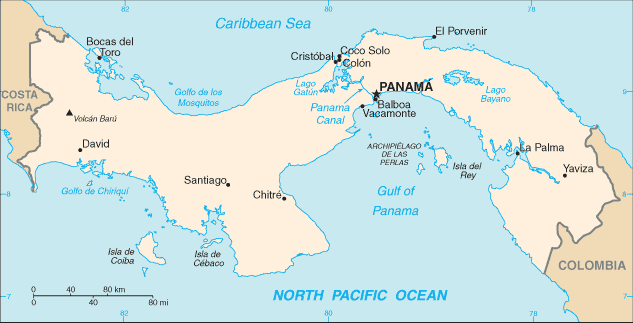
The Panama Canal stands as one of the most consequential engineering and geopolitical projects in modern history. Connecting the Atlantic and Pacific Oceans, it reshaped global trade, naval strategy, and the political trajectory of Central America. Its story is not merely technical; it is deeply entangled with imperial ambition, national sovereignty, and ongoing geopolitical competition.
The Creation of the Panamanian State
The emergence of Panama as an independent state in 1903 cannot be understood outside the strategic ambitions of the United States. At the time, Panama was a province of Colombia. The U.S., eager to construct a canal across the isthmus, initially negotiated with Colombia but failed to secure ratification of a treaty granting construction rights. In response, Washington supported a separatist movement in Panama. With implicit U.S. military backing, Panama declared independence in November 1903. Shortly thereafter, the newly formed government signed the Hay–Bunau-Varilla Treaty, granting the United States control over the Canal Zone in perpetuity. Thus, the birth of Panama as a state was inseparable from the geopolitical calculus surrounding the canal.
Stay ahead of global events.
Get clear geopolitical analysis in your inbox.
The Canal Idea and the French Attempt
Long before the United States took control, the idea of a canal across Central America had captured European imagination. The French effort, led by Ferdinand de Lesseps—celebrated for the Suez Canal—began in 1881. However, the Panama project proved far more complex. Unlike the relatively flat terrain of Suez, Panama presented dense jungles, unpredictable rivers, and mountainous terrain. Tropical diseases such as malaria and yellow fever devastated the workforce. Engineering miscalculations, corruption, and financial mismanagement compounded the crisis. By 1889, the French effort collapsed in scandal and bankruptcy, becoming one of the largest financial debacles of the 19th century. Despite failure, the French left behind partial excavations and valuable data that would later aid American engineers.
The American Construction of the Canal
The United States assumed control of the project in 1904, bringing a more systematic approach to both engineering and public health. Under the leadership of engineers such as John Stevens and later George Washington Goethals, and with the medical breakthroughs of Dr. William Gorgas, the U.S. successfully controlled mosquito-borne diseases, dramatically reducing mortality rates. The decision to build a lock-based canal rather than a sea-level one proved crucial. Massive locks at Gatun, Pedro Miguel, and Miraflores enabled ships to traverse the elevation differences created by the continental divide.
Completed in 1914, the canal represented a triumph of engineering and organizational capacity. It immediately reduced maritime travel distances—cutting the route between New York and San Francisco by thousands of miles—and became a cornerstone of U.S. naval mobility and commercial expansion.
Strategic and Economic Importance
The Panama Canal rapidly became indispensable to global trade. By allowing ships to bypass the lengthy and hazardous journey around Cape Horn, it reduced shipping costs, transit times, and insurance risks. For the United States, it had dual significance: economic efficiency and military flexibility. The ability to quickly transfer naval forces between oceans enhanced strategic reach, particularly during the World Wars and the Cold War.
Globally, the canal facilitated the integration of markets, enabling faster movement of raw materials and manufactured goods. Its importance has only grown with the expansion of container shipping and global supply chains. Even today, a significant percentage of world maritime trade passes through the canal annually, making it a critical chokepoint in international logistics.
Status of the Canal up to Jimmy Carter
From its completion until the late 20th century, the canal remained under U.S. control, administered as the Panama Canal Zone—a quasi-colonial enclave. This arrangement increasingly generated resentment within Panama. Nationalist movements argued that sovereignty was compromised, and protests periodically erupted, particularly in the 1960s.
By the 1970s, changing global norms regarding self-determination and sovereignty placed pressure on the United States to reconsider its position. President Jimmy Carter adopted a more conciliatory approach, recognizing that long-term stability required addressing Panamanian grievances.
Transfer of the Canal to Panama
In 1977, the Torrijos–Carter Treaties were signed between the United States and Panama. These agreements outlined a gradual transfer of control over the canal, culminating on December 31, 1999, when Panama assumed full sovereignty. The treaties also guaranteed the canal’s neutrality, ensuring that it would remain open to vessels of all nations in times of peace and war.
The transfer marked a significant shift in hemispheric relations. For Panama, it represented the recovery of national dignity and economic autonomy. For the United States, it demonstrated a recalibration of foreign policy toward partnership rather than direct control.
Contemporary Controversies
Despite the successful transfer, the canal remains a focal point of geopolitical tension. One major issue concerns the growing presence of foreign investment—particularly from China—in Panama’s infrastructure, including ports and logistics networks linked to the canal. While Panama maintains operational control, external economic influence raises questions about long-term strategic alignment.
Another controversy involves environmental pressures. Climate change has led to fluctuating rainfall patterns, directly affecting the canal’s freshwater-dependent lock system. Periodic droughts have forced restrictions on ship transit, highlighting vulnerabilities in what was once considered a stable system.
Additionally, there are debates about economic inequality within Panama. While canal revenues contribute significantly to the national budget, critics argue that benefits are unevenly distributed, raising concerns about governance and development priorities.
Future Scenarios
Looking ahead, several plausible scenarios emerge. First, Panama may continue to strengthen its position as a global logistics hub, leveraging canal revenues to expand ports, rail systems, and digital infrastructure. The 2016 canal expansion, which allows larger “New Panamax” vessels, already reflects this trajectory.
Second, geopolitical competition could intensify. As global trade routes become more contested, major powers may seek greater influence over strategic chokepoints. The canal could become a subtle arena for influence between the United States, China, and other actors, even without formal control changing hands.
Third, environmental constraints may force structural adaptation. Water scarcity could necessitate new technologies, alternative transit systems, or even complementary routes elsewhere in Central America. Discussions of rival canal projects in Nicaragua or Mexico, while speculative, underscore persistent interest in alternative pathways.
Finally, there is the possibility of systemic disruption. A major geopolitical conflict, cyberattack, or environmental crisis could temporarily disable the canal, sending shockwaves through global supply chains. Such scenarios highlight the continued strategic fragility of even the most established infrastructures.
Conclusion
The Panama Canal remains a defining feature of the modern world—an intersection of engineering achievement, geopolitical strategy, and economic necessity. From its origins in imperial ambition and technological optimism to its present status as a symbol of national sovereignty and global interdependence, the canal’s history reflects broader patterns in international relations. Its future, shaped by environmental pressures and shifting power dynamics, will continue to influence the architecture of global trade and the balance of geopolitical influence.
You May Also Like
The 10 Maritime Chokepoints That Control the Global Economy