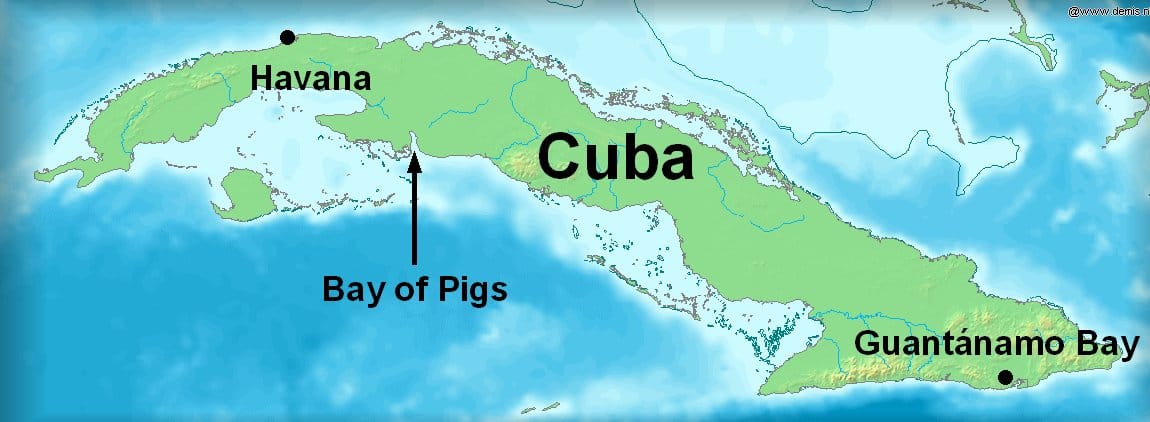
The relationship between the United States and Cuba has evolved through phases of intervention, dominance, hostility, and limited rapprochement. This timeline traces key developments from 1898 to the present, with particular emphasis on the Cuban Missile Crisis—arguably the most dangerous moment of the Cold War.
1898–1933: Intervention and Informal Empire
The modern relationship begins with the Spanish-American War. Following the explosion of the USS Maine in Havana harbor, the United States intervened in Cuba’s war of independence against Spain. By the war’s end in 1898, Spain ceded control, and Cuba fell under U.S. military occupation.
In 1902, Cuba formally gained independence, but sovereignty was limited by the Platt Amendment. This provision allowed the U.S. to intervene in Cuban affairs and led to the establishment of the Guantánamo Bay naval base. Throughout the early 20th century, American economic influence dominated Cuban sugar production and infrastructure.
Stay ahead of global events.
Get clear geopolitical analysis in your inbox.
1933–1958: Nationalism and Uneasy Partnership
The 1933 revolution brought political instability and eventually the rise of Fulgencio Batista. While Batista maintained close ties with Washington, his regime became increasingly authoritarian and corrupt.
Cuba remained economically dependent on the U.S., but nationalist sentiment grew. By the 1950s, social inequality and political repression created fertile ground for revolution.
1959–1961: Revolution and Rupture
In 1959, Fidel Castro overthrew Batista. Initially, the U.S. recognized the new government, but relations deteriorated rapidly as Castro nationalized American-owned assets and aligned with the Soviet Union.
In 1961, the U.S. severed diplomatic relations and backed the failed Bay of Pigs Invasion. This event pushed Cuba further into the Soviet sphere and set the stage for the most dangerous crisis in bilateral—and global—relations.
1962: The Cuban Missile Crisis—Causes, Danger, and Consequences
The Cuban Missile Crisis marked the peak of Cold War tensions and brought the world to the brink of nuclear war.
Causes
Several factors converged:
- Strategic imbalance: The Soviet Union sought to counter U.S. nuclear superiority and the presence of American missiles in Turkey.
- Cuban security concerns: After the Bay of Pigs, Cuba feared another U.S. invasion and welcomed Soviet protection.
- Cold War rivalry: Ideological and geopolitical competition between the U.S. and the USSR intensified decision-making.
In October 1962, U.S. reconnaissance discovered Soviet nuclear missile installations in Cuba, just 90 miles from Florida.
The Crisis Unfolds
President John F. Kennedy imposed a naval “quarantine” around Cuba, demanding removal of the missiles. Soviet leader Nikita Khrushchev initially resisted.
For 13 days, the world faced the real possibility of nuclear war. Military forces were placed on high alert, and miscalculations could have triggered catastrophic escalation.
The Level of Danger
The crisis is widely considered the closest humanity has come to nuclear conflict. Several incidents nearly spiraled out of control:
- A U.S. U-2 spy plane was shot down over Cuba.
- A Soviet submarine, under pressure and depth charges, nearly launched a nuclear torpedo.
- Military commanders on both sides prepared for escalation.
The margin for error was minimal; individual decisions at lower command levels could have initiated global war.
Resolution
A negotiated settlement ended the crisis:
- The USSR agreed to withdraw missiles from Cuba.
- The U.S. secretly agreed to remove missiles from Turkey.
- Washington pledged not to invade Cuba.
Consequences
The crisis reshaped global politics:
- Nuclear awareness: It highlighted the catastrophic risks of nuclear brinkmanship.
- Communication improvements: The “hotline” between Washington and Moscow was established.
- Arms control: It paved the way for agreements like the Limited Test Ban Treaty (1963).
- Enduring hostility: U.S.–Cuba relations remained frozen for decades.
1963–1991: Cold War Freeze
Following the crisis, the U.S. imposed a comprehensive embargo on Cuba, which remains a central feature of relations. Cuba became a key Soviet ally, receiving economic and military support.
Throughout the Cold War, Cuba participated in revolutionary movements abroad, particularly in Africa and Latin America, further straining relations with Washington.
1991–2013: Post-Soviet Adjustment
The collapse of the Soviet Union in 1991 plunged Cuba into economic crisis. Despite this shift, the U.S. maintained the embargo, reinforced by legislation such as the Helms-Burton Act (1996).
Limited migration agreements and humanitarian exchanges occurred, but political relations remained tense.
2014–2017: Rapprochement
A major turning point came under Barack Obama and Raúl Castro. In 2014, both countries announced the normalization of relations:
- Diplomatic ties were restored.
- Travel and trade restrictions were partially eased.
- Obama visited Havana in 2016—the first such visit by a U.S. president in nearly a century.
This period suggested a potential long-term thaw.
2017–2020: Renewed Tensions
Under Donald Trump, the U.S. reversed many Obama-era policies:
- Travel and business restrictions were tightened.
- Cuba was re-designated as a state sponsor of terrorism.
- Diplomatic staff were reduced following unexplained health incidents.
2021–Present: Limited Engagement Amid Constraints
The administration of Joe Biden has taken a cautious approach:
- Some restrictions on remittances and travel have been eased.
- Core elements of the embargo remain in place.
- Political tensions persist, particularly over human rights issues and domestic protests in Cuba.
Conclusion
From intervention in 1898 to cautious engagement today, U.S.–Cuba relations reflect broader global dynamics, especially the Cold War. The Cuban Missile Crisis remains the defining moment—demonstrating how regional disputes can escalate into existential threats.
Today, while the risk of nuclear confrontation has receded, the legacy of mistrust endures. The relationship continues to balance between strategic caution and opportunities for normalization, shaped by history, ideology, and shifting geopolitical realities.
You May Also Like
A Brief History of Greenland: Key Dates and Events
Does NATO Automatically Go to War? Article 5 Explained
The Panama Canal: History, Power, and Strategic Futures