When the Law Falls Silent, Force Speaks

When the Law Falls Silent, Force Speaks

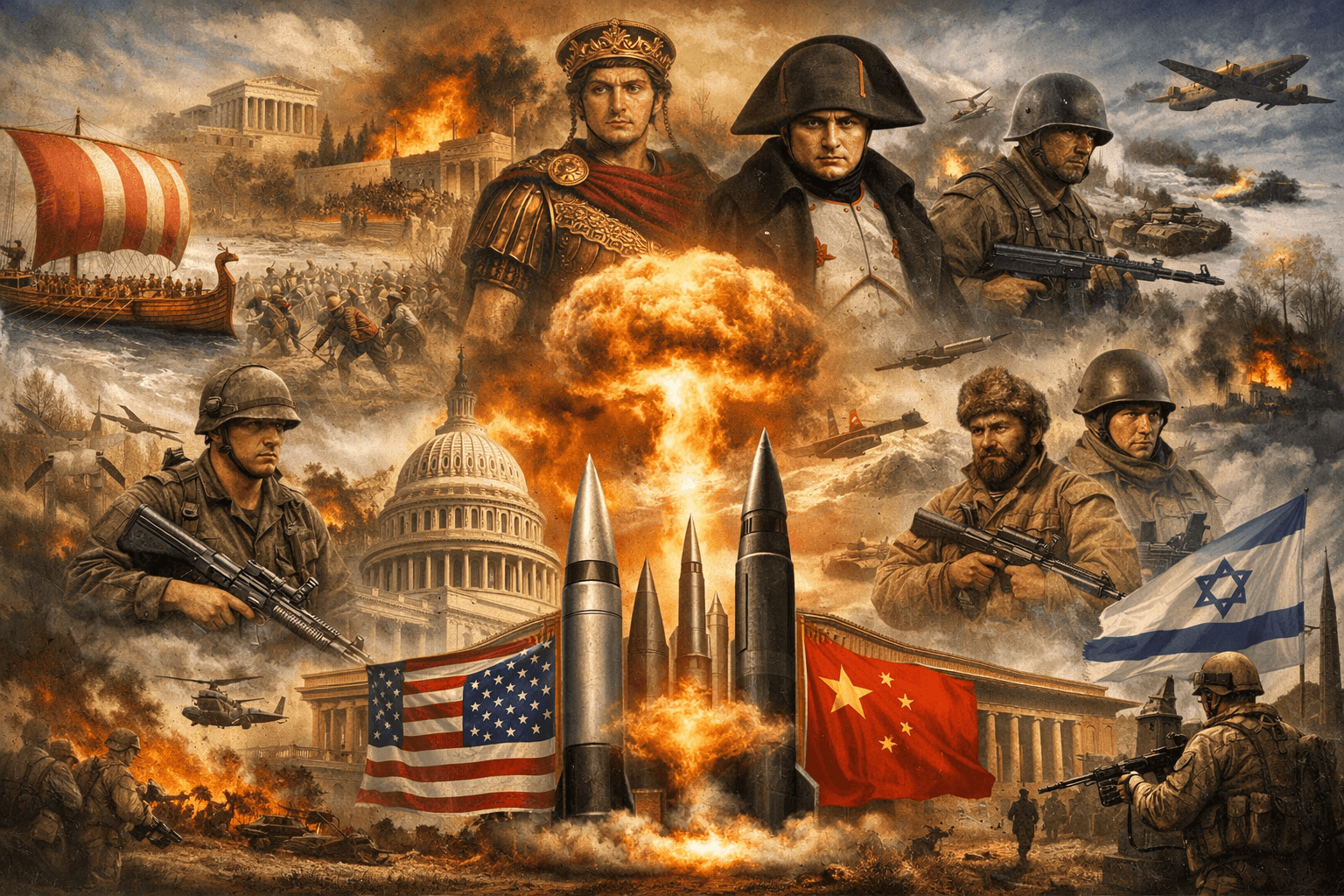
It is perfectly clear that, no matter how democratic a country may be domestically, its foreign policy borrows very little from the rule of law. This is also the case of the United States, which—however much it claims to be democratic and morally superior to, say, Russia or China—has far too many moments in its recent history in which it acted exactly as it wanted, not as it should have. Obviously, when you criticize someone, you should look not at who is doing the criticizing, but at what is being said. But sometimes—and this is such a case—it is also worth looking at who is speaking, at the one pointing the finger, always at others.

Greenland, the Gordian Knot of the Transatlantic Relationship

Greenland, the Gordian Knot of the Transatlantic Relationship

Anyone passionate about history is at least somewhat familiar with the story of the “Gordian knot,” but for readers who may not be very well acquainted with the military exploits of Alexander the Great, it is useful to briefly revisit this story. In the fourth century BCE, Phrygia, a region in Asia Minor, was part of the Persian Empire. The principal city of Phrygia was Gordium. In one of the city’s temples stood a chariot bound with an extremely intricate knot. According to the legend transmitted by historical sources, whoever untied the knot would rule Asia. Alexander the Great attacked the Persian Empire in 334 BCE and arrived at Gordium. Whether out of superstition or as a very capable politician who understood the propaganda value of the prophecy, he chose to cut the knot with his sword, demonstrating not only that he would become the ruler of Asia, but also the manner in which he would come to rule it: by the sword.

Between Opportunity and Controversy: The EU–Mercosur Trade Agreement Explained

Between Opportunity and Controversy: The EU–Mercosur Trade Agreement Explained

The proposed European Union–Mercosur trade agreement is one of the most ambitious—and controversial—trade deals negotiated in recent decades. Linking the EU with four South American countries (Brazil, Argentina, Uruguay, and Paraguay), the agreement aims to create a vast transatlantic market. Supporters see it as a strategic and economic win-win; critics warn of environmental, social, and economic risks. As with most grand projects, the devil lives comfortably in the details.

Strategic Stakes: Turkey and Israel in Somalia and Somaliland

Strategic Stakes: Turkey and Israel in Somalia and Somaliland

The Horn of Africa has become a critical arena for regional and global powers, with Somalia and Somaliland at the center of strategic competition. While Somalia struggles with decades of instability, militant activity, and weak governance, Somaliland has maintained relative peace and functioning institutions, despite its lack of international recognition. These contrasting realities shape how external powers, notably Turkey and Israel, pursue their interests in the region.

Analysis: Iran’s Protests and the Structural Limits of Regime Control

Analysis: Iran’s Protests and the Structural Limits of Regime Control

The current wave of protests in Iran reflects more than a cyclical episode of social unrest; it exposes deep structural vulnerabilities within the Islamic Republic that economic repression and coercive force alone can no longer fully contain.

At the structural level, Iran’s crisis is driven by a convergence of long-term economic decline, demographic pressure, and political stagnation. High inflation, currency devaluation, and chronic unemployment—especially among urban youth—have steadily eroded the regime’s social contract. Subsidies and welfare mechanisms that once mitigated public anger are increasingly unsustainable, limiting the state’s capacity to “buy” stability.