Why a Strong Germany Is Good News

Why a Strong Germany Is Good News

The idea of a strong Germany has long triggered unease across Europe and beyond. History casts a long shadow, and memories of the twentieth century still shape instinctive reactions. Yet the geopolitical realities of the twenty-first century demand a more nuanced—and ultimately more reassuring—assessment. A militarily stronger Germany is not a threat to Europe; it … Read more

Strategic Miscalculations in the History of Conflict: From Ancient Sicily to the Modern Middle East

Strategic Miscalculations in the History of Conflict: From Ancient Sicily to the Modern Middle East

Military history is, to a significant extent, a history of miscalculation. States rarely enter conflicts believing they will lose; rather, they act on flawed assumptions, incomplete intelligence, ideological biases, or overconfidence in their own capabilities. These errors—strategic, operational, or political—often shape not only the outcome of wars but the long-term trajectories of civilizations. From antiquity … Read more

What Would a NATO Without the United States Look Like?

What Would a NATO Without the United States Look Like?

Since its founding in 1949, NATO has been inseparable from the leadership, resources, and strategic vision of the United States. The Alliance was born in the early days of the Cold War as a collective defense pact aimed at deterring the expansion of the Soviet Union. From the outset, the United States functioned as the core pillar—militarily, politically, … Read more

Viktor Orbán, the EU’s Trojan Horse: What’s at Stake in Hungary’s 2026 Elections

Viktor Orbán, the EU’s Trojan Horse: What’s at Stake in Hungary’s 2026 Elections

Introduction: Why the 2026 Hungarian Elections Matter The Hungarian parliamentary elections scheduled for 2026 are among the most consequential political events in Europe in the current decade. After more than a decade and a half in power, Prime Minister Viktor Orbán faces a political landscape shaped by economic strain, geopolitical instability, and growing domestic fatigue. … Read more

From “America First” to “America Alone”: What the Strait of Hormuz Reveals

From “America First” to “America Alone”: What the Strait of Hormuz Reveals

The slogan “America First” has long resonated in U.S. political discourse, evoking a promise of national strength, economic protection, and strategic independence. Yet, in practice—particularly during the Trump administration—this doctrine has often translated into a more isolating posture: one that risks turning “America First” into “America Alone.” From trade disputes with European allies to strained … Read more

The Algorithm Arms Race: Why AI Is the Real Cold War

The Algorithm Arms Race: Why AI Is the Real Cold War

Introduction: A New Kind of Global Rivalry For most of the twentieth century, global power was defined by nuclear arsenals, military alliances, and territorial influence. The Cold War between the United States and the Soviet Union revolved around ideological confrontation and military deterrence. Today, however, the most consequential geopolitical competition is unfolding in a very … Read more

The 10 Maritime Chokepoints That Control the Global Economy

The 10 Maritime Chokepoints That Control the Global Economy

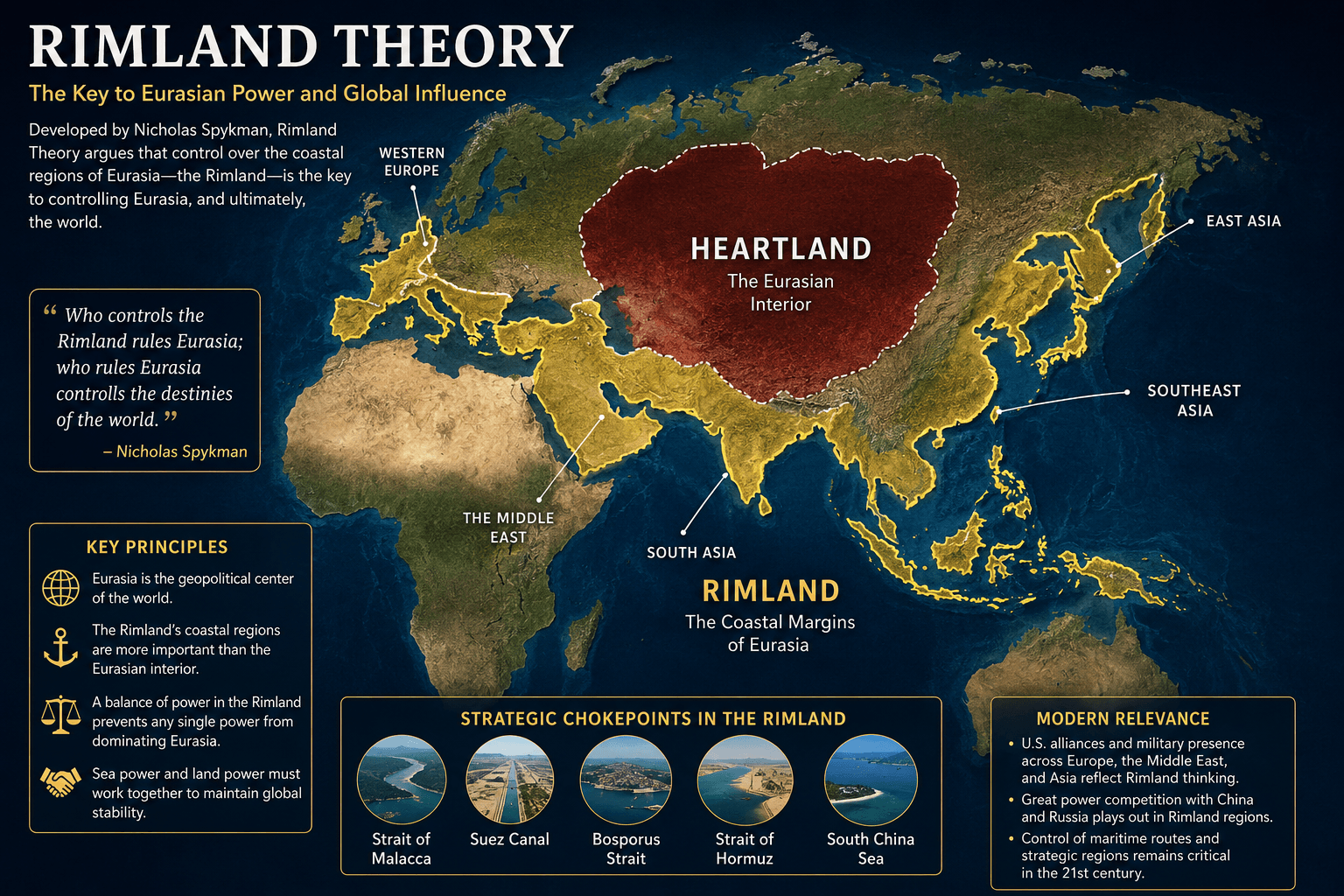
Introduction: Geography Still Rules Global Trade Globalization is often described as a system driven by finance, technology, and digital connectivity. Yet beneath the complexity of modern markets lies a much simpler reality: the global economy still moves primarily by sea. Around 80–90 percent of world trade by volume travels on ships, linking production centers, resource … Read more