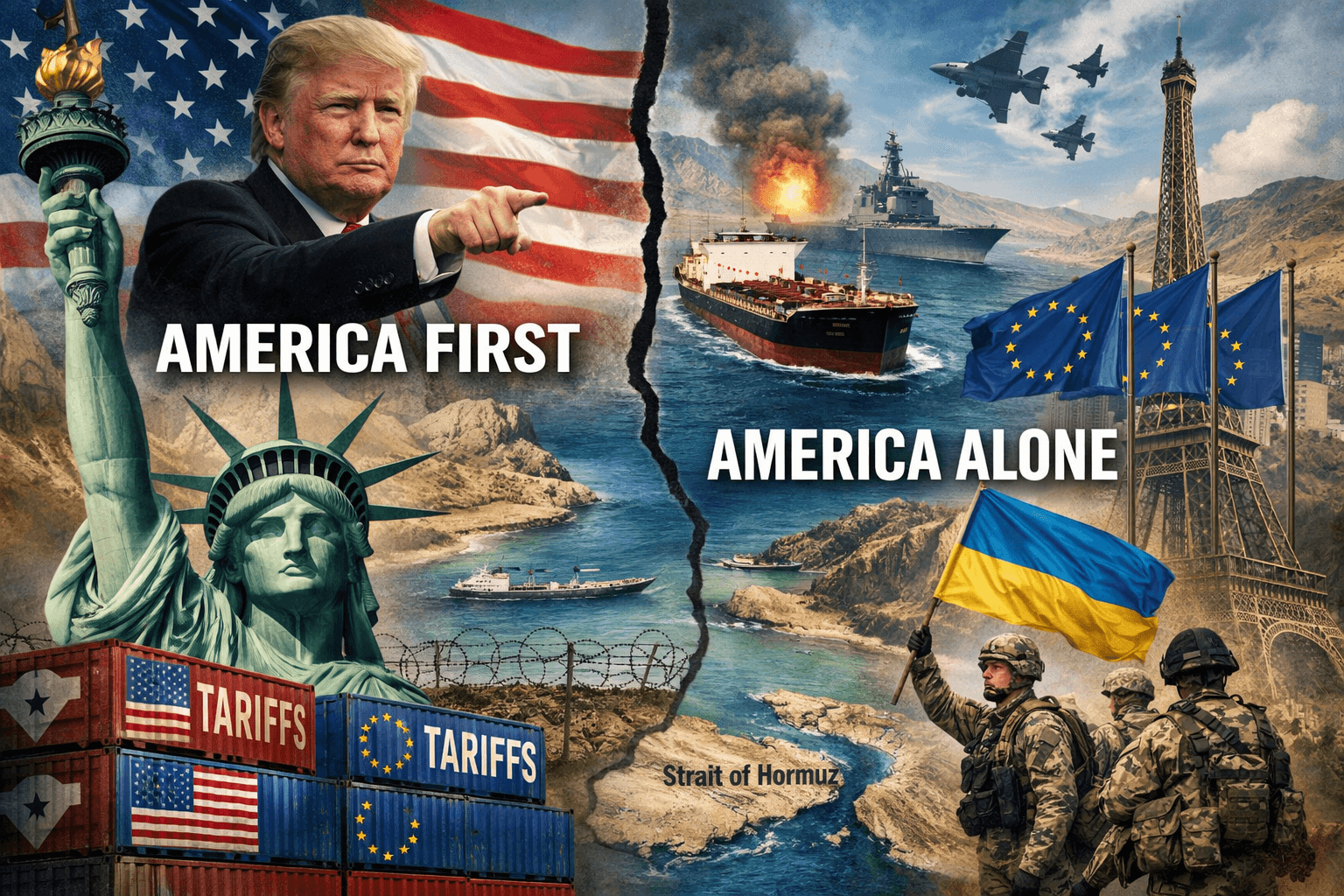
The Hidden Strategy: How Pressure on Iran and Venezuela Could Be Part of Washington’s China Play

The Hidden Strategy: How Pressure on Iran and Venezuela Could Be Part of Washington’s China Play

In recent years, U.S. actions toward Iran and Venezuela have often been interpreted through familiar lenses: nuclear proliferation, sanctions enforcement, or ideological rivalry. Yet another explanation is gaining attention among analysts. Some observers argue that the Trump administration’s pressure on both countries may form part of a broader geopolitical strategy aimed at countering China’s expanding … Read more

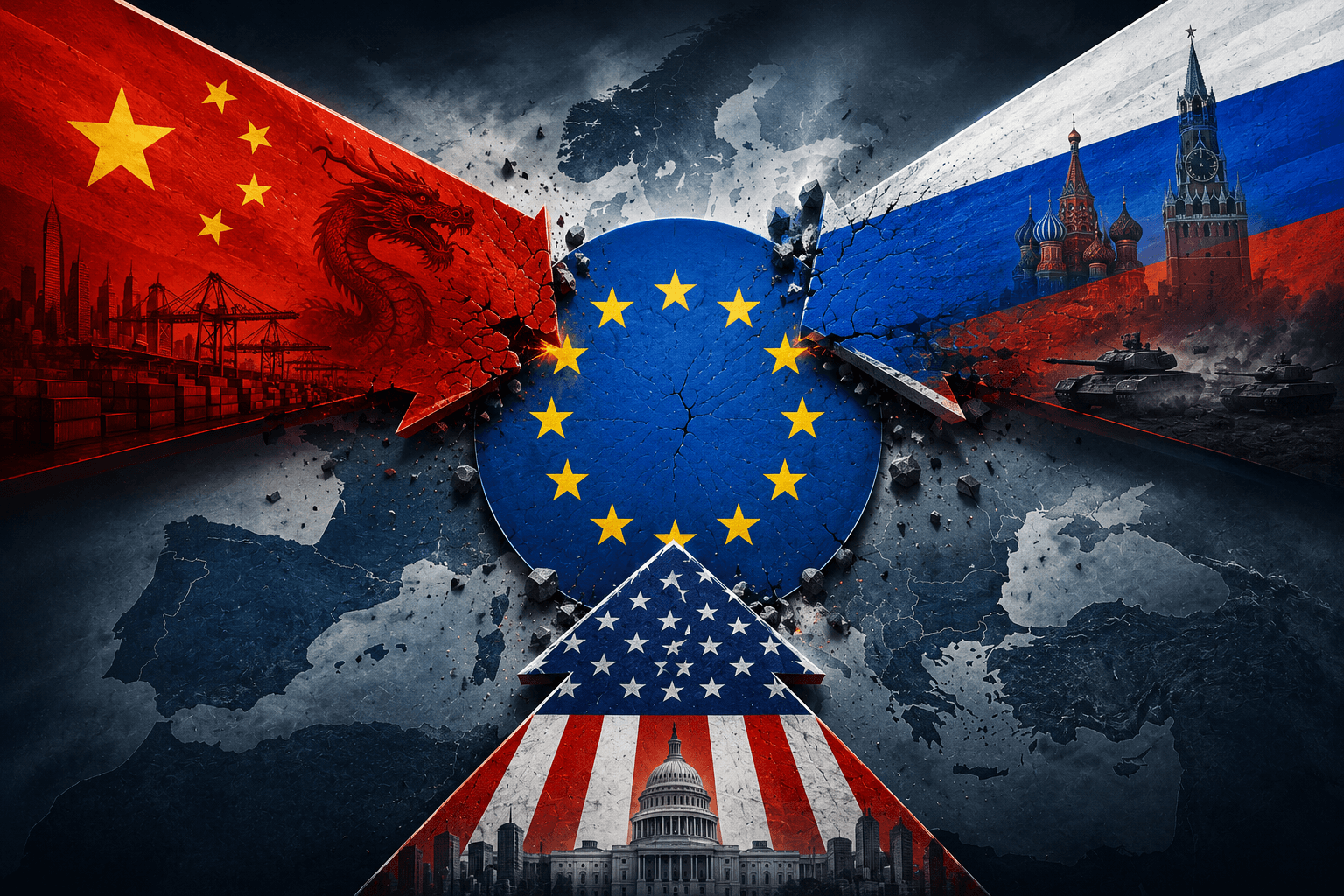
Why Now Is the Moment for the United States of Europe?

Why Now Is the Moment for the United States of Europe?

A Pro-European Analysis of How the Alienation of Europe Through Trump-Era Policies Weakens America—and Why the United States Is Stronger With Europe Than Without It Introduction: A Paradox of Power At first glance, the idea of a United States of Europe can sound either utopian or bureaucratic to the point of satire. Critics imagine endless meetings, translators … Read more

The Case for a Unified European Army: Strategic Autonomy, Security, and the Future of EU Power

The Case for a Unified European Army: Strategic Autonomy, Security, and the Future of EU Power

Introduction: From Economic Giant to Strategic Actor For decades, the European Union has been described as an economic superpower and a political dwarf. While the EU has built an impressive single market, a common currency for many of its members, and a complex system of governance, it has consistently struggled to translate its economic weight … Read more

Europe’s Realistic Options if the United States Attempts to Annex Greenland

Europe’s Realistic Options if the United States Attempts to Annex Greenland

 Introduction In early 2026, renewed rhetoric from senior U.S. political leaders about acquiring or even annexing Greenland — a sovereign territory of the Kingdom of Denmark and part of NATO — sparked significant concern in Europe. European governments, including France, Germany, Denmark and EU institutions, condemned such proposals, reaffirming that Greenland’s sovereignty belongs to its people and Denmark’s constitutional processes, not external coercion. While … Read more

No Rex

No Rex

The phrase No Rex—“no king”—captures a political instinct far older than modern democracy. It is a warning, a boundary, and a declaration of civic maturity. From the Roman Republic to the founding of the United States, rejection of monarchy has not merely been institutional but moral. In this light, contemporary concerns about the monarchical tendencies attributed … Read more

When the Law Falls Silent, Force Speaks

When the Law Falls Silent, Force Speaks

It is perfectly clear that, no matter how democratic a country may be domestically, its foreign policy borrows very little from the rule of law. This is also the case of the United States, which—however much it claims to be democratic and morally superior to, say, Russia or China—has far too many moments in its recent history in which it acted exactly as it wanted, not as it should have. Obviously, when you criticize someone, you should look not at who is doing the criticizing, but at what is being said. But sometimes—and this is such a case—it is also worth looking at who is speaking, at the one pointing the finger, always at others.

Greenland, the Gordian Knot of the Transatlantic Relationship

Greenland, the Gordian Knot of the Transatlantic Relationship

Anyone passionate about history is at least somewhat familiar with the story of the “Gordian knot,” but for readers who may not be very well acquainted with the military exploits of Alexander the Great, it is useful to briefly revisit this story. In the fourth century BCE, Phrygia, a region in Asia Minor, was part of the Persian Empire. The principal city of Phrygia was Gordium. In one of the city’s temples stood a chariot bound with an extremely intricate knot. According to the legend transmitted by historical sources, whoever untied the knot would rule Asia. Alexander the Great attacked the Persian Empire in 334 BCE and arrived at Gordium. Whether out of superstition or as a very capable politician who understood the propaganda value of the prophecy, he chose to cut the knot with his sword, demonstrating not only that he would become the ruler of Asia, but also the manner in which he would come to rule it: by the sword.