Introduction
Naval blockades have long served as one of the most decisive instruments of maritime power. By restricting an adversary’s access to trade, resources, and communication, blockades can weaken an enemy without necessarily engaging in large-scale land battles. From ancient Greece to modern geopolitical chokepoints, blockades have shaped the outcomes of wars and influenced global economic systems. Their effectiveness lies not only in military dominance but also in economic strangulation and psychological pressure.
This article traces the evolution of naval blockades, examining key historical examples and their strategic utility. It also explores the theoretical framework developed by Alfred Thayer Mahan, whose ideas on sea power remain central to understanding blockade strategy.
Stay ahead of global events.
Get clear geopolitical analysis in your inbox.
Early Examples of Naval Blockade
The Peloponnesian War
One of the earliest examples of blockade strategy occurred during the Războiul Peloponesiac (431–404 BCE). Athens relied heavily on its navy to secure grain imports through the Black Sea. Sparta, traditionally a land power, eventually adopted naval strategies to disrupt these supply lines. Although not a formal blockade in the modern sense, the restriction of maritime supply routes demonstrated the strategic importance of sea control.
The Fall of Constantinople (1453)
During the Căderea Constantinopolului, the Ottoman Empire effectively implemented a combined land-sea blockade against the Byzantine capital. By controlling the Bosporus and limiting maritime resupply, the Ottomans isolated Constantinople. The famous chain across the Golden Horn initially prevented naval intrusion, but Ottoman forces circumvented it, tightening the blockade. The fall of the city illustrated how naval control could decisively influence siege warfare.
Early Modern Developments
The Great Siege of Malta (1565)
The Marele Asediu al Maltei involved Ottoman attempts to isolate and conquer the island held by the Knights Hospitaller. While not a perfect blockade, Ottoman naval dominance aimed to cut Malta off from reinforcements. The failure of this effort demonstrated that blockades require sustained control and logistical superiority.
Anglo-Dutch Naval Wars
In the 17th century, maritime blockades became more systematic during the Anglo-Dutch Wars. Both England and the Dutch Republic attempted to disrupt each other’s trade networks. These conflicts marked a transition toward economic warfare at sea, where blockades targeted commerce rather than merely military supply.
The Napoleonic Continental System
The blockade reached a new level of sophistication under Napoleon Bonaparte. In 1806, he introduced the Continental System, an ambitious attempt to economically isolate Britain.
Rather than relying solely on naval dominance—which France lacked—Napoleon imposed a land-based economic blockade across Europe. Through decrees such as the Berlin Decree (1806) and Milan Decree (1807), he forbade European states under French control or influence from trading with Britain. Ports across the continent were closed to British goods, and neutral ships trading with Britain risked confiscation.
The objective was clear: cripple Britain’s economy by cutting off its access to European markets. However, the system faced major challenges:
- Widespread smuggling undermined enforcement
- European economies suffered from restricted trade
- Key allies, including Russia, eventually withdrew compliance
Ultimately, the Continental System failed to defeat Britain and instead contributed to Napoleon’s downfall by straining relations with other European powers.
The 19th Century: Industrial Blockade
The American Civil War
During the Războiul Civil American, the Union implemented the “Anaconda Plan,” a large-scale naval blockade of Confederate ports. This blockade aimed to suffocate the Southern economy by preventing cotton exports and war material imports.
Over time, the blockade proved highly effective:
- Southern trade collapsed
- Industrial shortages weakened the Confederacy
- International recognition of the Confederacy was hindered
This marked one of the first modern, industrial-scale blockades.
World War I: Total Economic Warfare
The British blockade of Germania during World War I (1914-1918) was one of the most comprehensive in history. The Royal Navy controlled access to the North Sea and restricted imports of food, raw materials, and even neutral goods destined for Germany.
The blockade had devastating effects:
- Severe food shortages
- Civilian malnutrition and unrest
- Long-term economic exhaustion
Germany responded with unrestricted submarine warfare, targeting Allied shipping. This escalation demonstrated how blockades could provoke counter-strategies with global consequences.
World War II: Global Blockade Systems
Germany and the Battle of the Atlantic
During World War II, Germany attempted to blockade Britain through submarine warfare in the Battle of the Atlantic. The goal was to cut off supply lines across the Atlantic.
Although initially effective, Allied technological and logistical improvements eventually overcame the threat. Britain survived due to convoy systems, radar, and codebreaking.
The Blockade of Japan
The United States conducted a highly effective naval blockade against Japonia. Submarine warfare and control of Pacific sea lanes cut Japan off from vital resources such as oil and rubber.
By 1945:
- Japan’s industrial production had collapsed
- Fuel shortages crippled military operations
- Civilian hardship intensified
This blockade significantly contributed to Japan’s defeat.
Cold War and Modern Applications
The Cuban Missile Crisis
The United States imposed a naval “quarantine” during the Criza rachetelor din Cuba (1962). While carefully labeled to avoid the legal implications of a blockade, it functioned similarly by preventing Soviet ships from delivering missiles to Cuba.
This demonstrated how blockades could be used as tools of coercion without escalating into full war.
The Gulf War
Following the 1991 Gulf War, coalition forces implemented a sustained maritime embargo on Iraq, significantly restricting its capacity to trade and rearm while demonstrating the enduring strategic value of naval power in enforcing international sanctions.
Alfred Thayer Mahan and Naval Power Projection
Alfred Thayer Mahan fundamentally shaped modern understanding of naval warfare. In his seminal work The Influence of Sea Power upon History (1890), Mahan argued that national greatness depended on control of sea lanes.
Key ideas relevant to blockades include:
- Sea control enables economic dominance
- Strong navies can project power globally
- Blockades are tools of strategic pressure rather than mere tactics
Mahan emphasized that a successful blockade requires:
- A powerful and well-positioned fleet
- Control of key maritime chokepoints
- Sustained logistical support
His theories influenced major naval powers, including Britain, Germany, and the United States, and remain relevant in modern naval doctrine.
Strategic Utility of Naval Blockades
Naval blockades serve several critical functions:
Economic Warfare
By restricting trade, blockades weaken an enemy’s economy over time. This approach can be more sustainable than direct military confrontation.
Military Advantage
Cutting off supplies reduces an opponent’s ability to wage war effectively.
Psychological Impact
Civilian hardship and resource scarcity can erode morale and political stability.
Political Leverage
Blockades can coerce adversaries without immediate escalation to full-scale conflict.
The Strait of Hormuz: A Contemporary Flashpoint
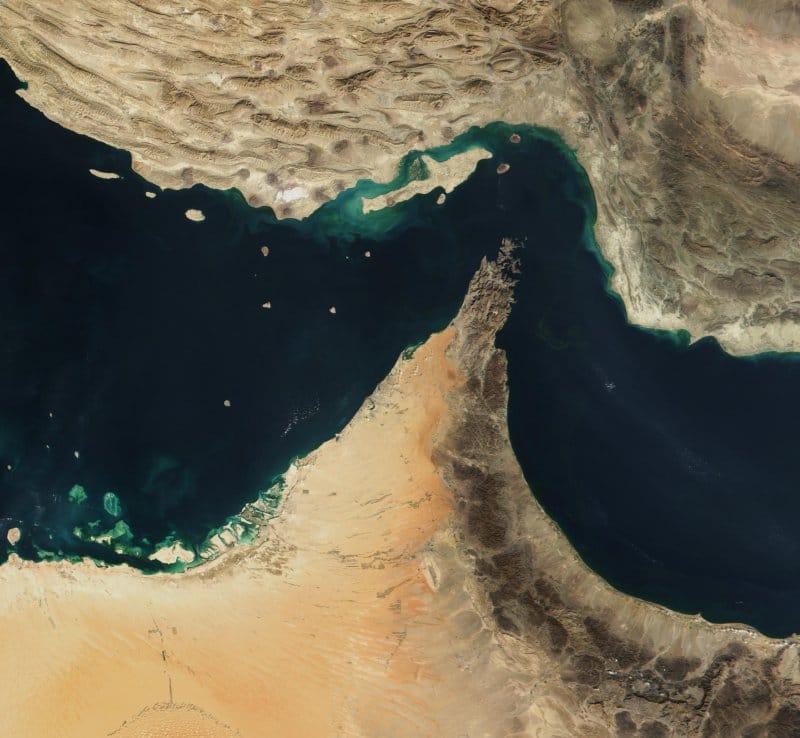
In the 21st century, the strategic importance of maritime chokepoints remains evident in the Strait of Hormuz, a narrow passage linking the Persian Gulf to global markets and serving as one of the world’s most critical oil transit routes.
Periodic tensions—particularly involving Iran—have raised concerns about a potential blockade or disruption:
- A significant portion of global oil supply passes through the strait
- Even temporary disruptions can impact global energy prices
- Naval presence by multiple powers underscores its importance
While not a constant blockade, the threat itself demonstrates how control of maritime chokepoints continues to shape global strategy.
In the contemporary security environment, developments in the Strait of Hormuz during early 2026 have escalated beyond intermittent tensions into what can be described as a fluid but at times near-total blockade scenario. Iranian actions—including the use of naval mines, drones, and the seizure or harassment of commercial vessels—have significantly disrupted maritime traffic, at points reducing transit to a fraction of its normal volume. While not formally declared, these measures have functioned as a de facto blockade, demonstrating Iran’s capacity to threaten one of the world’s most critical energy corridors. In response, the United States has implemented a robust counter-blockade strategy, combining naval escorts, freedom of navigation operations, and direct interdiction of vessels linked to Iranian oil exports. This approach seeks not only to restore the flow of global commerce but also to impose reciprocal economic pressure on Iran.
In terms of efficiency, Iranian actions have proven highly effective in the short term, generating sharp increases in insurance costs, disrupting supply chains, and amplifying volatility in global energy markets. However, their sustainability remains limited, as prolonged disruption risks triggering overwhelming military and economic countermeasures. Conversely, the U.S.-led response has been effective in partially restoring navigational security and deterring a complete shutdown, though it requires continuous resource commitment and carries escalation risks. In relation to their strategic objectives, both sides achieve conditional success: Iran demonstrates its deterrent leverage and capacity for disruption, while the United States upholds the principle of freedom of navigation and constrains the long-term impact of the blockade. This dynamic underscores a key feature of modern naval strategy—the utility of blockade lies less in permanent closure than in controlled disruption, coercion, and strategic signaling.
Conclusion
From ancient sieges to modern geopolitical tensions, naval blockades have evolved into sophisticated instruments of state power. Whether through direct naval enforcement or economic systems like Napoleon’s Continental System, blockades have consistently demonstrated their ability to influence the outcome of conflicts.
The enduring relevance of blockade strategy reflects a fundamental truth emphasized by Mahan: control of the seas translates into control of economic and political power. As global trade continues to depend on maritime routes, naval blockades will remain a central element of strategic thinking in both war and peace.
You May Also Like
Hybrid Warfare: A Misleading Label for an Enduring Reality
Does NATO Automatically Go to War? Article 5 Explained