Author: Robert Saudelli
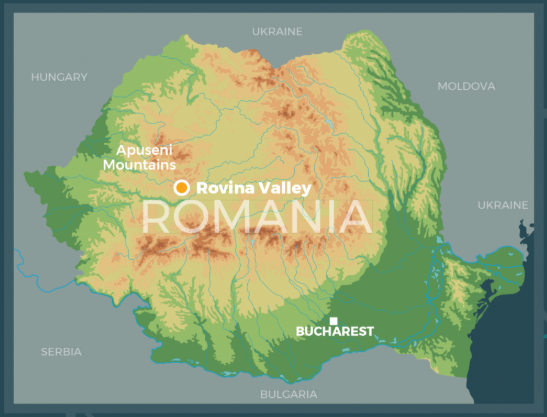
In 2025, the European Commission designated The Rovina Valley Project of Euro Sun Mining as strategically important to Europe’s raw materials supply. It was among the first batch of companies to receive such a designation. However, that assigned designation only means something if Romania actually acts on it. Now, as the Rovina Valley Project inches toward eventual construction, a persistent coalition of environmental activists is pushing the country to throw that opportunity away as Bucharest needs to decide, quickly, whether it wants to be taken seriously as a partner or treated as unreliable.
Stay ahead of global events.
Get clear geopolitical analysis in your inbox.
A CRMA regulation is not optional
The CRMA is a binding EU regulation. It obligates Romania to treat Strategic Projects with priority, predictability, and accelerated permitting timelines. This is the legal reality opponents keep talking around that is not infused with lofty ethereal ideals. The Critical Raw Materials Act isn’t a suggestion Romania can quietly ignore when it becomes politically inconvenient, or to be manipulated with loopholes and fishing expeditions for deficiencies. It is directly applicable in national law without need of domestic transposition. Brussels evaluated dozens of European mineral projects and selected Rovina Valley, alongside 46 others, for Strategic Project status, explicitly recognizing its importance to Europe’s copper supply, with its 1.4 billion lbs at a time when Europe is trying to electrify its economy, expand its power grid, and strengthen its defense industry. All of which depend heavily on this metal. The whole point of the CRMA and the Strategic Project designation was to prevent projects that the EU considers strategically important taking decades from discovery to extraction.
Romania has a chance to benefit from that framework in several sectors. But if it embraces the CRMA designation and then backs away when the company involved happens to be a Canadian company that followed due process rather than a state champion that stands to benefit, it is not shrewd skepticism; it is exactly the kind of unpredictability that makes European and international investors apprehensive. That matters because investors, banks, and Romania’s partners in the EU are watching how this project is handled. If a project receives Strategic Project status, Romania accepts that designation, and the process can still be derailed because of sustained activist pressure, it suggests that permits and regulatory decisions are never really final. That’s the sort of uncertainty investors remember, and it affects far more than one mining project. It influences how they view future investments in Romania’s energy, infrastructure, and industrial sectors, as well.
What those opposed to the project get wrong
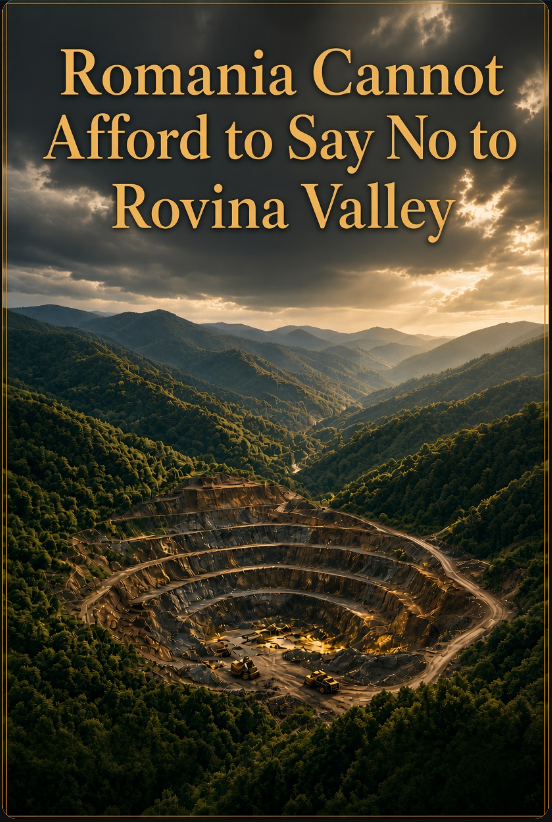
The environmental case against Rovina rests heavily on the memory of projects that no longer describe what’s being proposed. Rovina Valley is a cyanide-free operation using dry-stack tailings rather than a tailings dam. A design choice that directly addresses the failure mode that critics of older mining projects, including Roșia Montană, spent two decades warning about. A “3-for-1” reforestation commitment plants three trees for every one removed. These aren’t public-relations flourishes; they’re the specific engineering answers to the specific objections that sank previous projects. Opponents rarely engage with what’s actually being built – it’s easier to recycle arguments assembled for a different mine a generation ago than to assess the one in front of them.
There can certainly be other issues. In 2024, the Cluj Court of Appeal annulled the project’s environmental approval on a procedural defect – specifically the absence of a required cross‑border consultation under the Espoo Convention. The ruling did not identify environmental harm, and a corrected approval process is underway.
It’s also worth being honest about scale. While environmental concern is not a fringe consensus in Romania, what is focused on Rovina is a relatively small, but well-organized network (some with direct institutional roots in the Roșia Montană campaign) that has fought this project since 2021 through land acquisitions and litigation rather than through broad public mobilization. There has been no groundswell of Romanian public opposition to Rovina remotely comparable to what stopped Roșia Montană. Treating a handful of NGOs as a proxy for national sentiment misrepresents where the country stands.
Hunedoara has waited for this opportunity long enough
Then, there’s the part of this debate that gets the least attention: what happens to the people who actually live there. Hunedoara County has spent decades absorbing the decline of the industrial base that once sustained it, with nothing to replace what was the epicenter for mining in the Soviet era. This area is characterised by depopulation and lack of economic opportunity. Mining and heavy industry shrank and left comparatively little behind. Rovina Valley is projected to support roughly 1,500 long-term jobs once permitting clears, with company estimates putting direct employment around 500 full-time roles, approximately 1,000 indirect jobs, and more than 1,000 workers during construction alone. Estimates place royalties and corporate taxes flowing to the Romanian state at more than $500 million over the mine’s life, a meaningful share of which returns directly to the county and its communes. That is money for schools, roads, and services in a region that has gone without for far too long. The three host communes have already signed formal agreements supporting the project. This is precisely the kind of investment regional development policy is supposed to attract, arriving in precisely the region that needs it most.
The choice Romania has to make.
Roșia Montană is the cautionary tale here, but not the one that opponents think. Romania blocked that project under sustained public pressure, and the result wasn’t vindication. The result was a decade-long international arbitration that Romania ultimately won, at real diplomatic and financial cost, having demonstrated to every foreign investor watching that Romanian permitting decisions can be reversed under enough pressure, whatever the legal merits. Rovina Valley does not need to repeat that story. It has EU strategic backing, considerable international financing by major companies, modern environmental engineering, and local community support already in place.
The question in front of Romanian lawmakers isn’t whether a relatively small number of activists are unhappy. It’s whether Romania wants to be the country that had CRMA designation and then abandoned it, that sought EU investment and then made itself impossible to invest in, that left one of its poorest counties waiting because a handful of well-funded critics made enough noise. Europe is watching how this plays out. So is every investor deciding where their next euro of critical-minerals capital goes. Romania has a chance to show it can deliver, or a chance to prove, once again, that it can’t.
About the Writer
Robert Saudelli holds shares in Euro Sun Mining. He holds postgraduate diplomas in Financial Policy and Marketing, as well as an MBA. He has guest lectured at the University of New Brunswick and has been published by Cambridge Scholars and Benzinga. His work has also appeared on Investing.com, and he has been interviewed by the Wall Street Journal.
Disclaimer
The views and opinions expressed in this article are solely those of the author and do not necessarily reflect the official position, editorial policy, or views of Geopolitical Brief, its editors, contributors, or affiliated organizations. The publication of this article does not constitute an endorsement of the arguments, analyses, or conclusions presented herein. Geopolitical Brief is committed to fostering informed discussion and the exchange of diverse perspectives on international affairs and geopolitical developments.
You May Also Like